The Bank of England (BoE) decided to keep its key interest rate steady at 3.75% amid growing concerns over rising energy prices linked to the ongoing conflict between the US and Iran. The Monetary Policy Committee (MPC) voted 8-1 to hold rates, with Chief Economist Huw Pill dissenting and advocating for a 25 basis-point increase due to inflationary pressures. Governor Andrew Bailey emphasized the difficult economic environment, describing it as the “most difficult combination” of rising energy costs and slowing economic activity.
Bailey noted that the energy price shock, which originated from disruptions caused by the Iran war, is a negative supply shock that could embed inflation more deeply if it persists. He warned that if these higher energy prices continue to pass through the economy, the BoE would have to act to bring inflation back to its 2% target. March’s consumer price index (CPI) rose to 3.3%, up from 3% in February, mainly driven by fuel and food prices.
The central bank’s cautious stance reflects uncertainty about how long energy price pressures will last and their broader impact on wage demands and inflation expectations. Bailey highlighted that while the labor market shows signs of weakening, inflation risks remain significant. The BoE’s approach is to monitor evolving economic data closely, especially regarding employment and inflation trends.
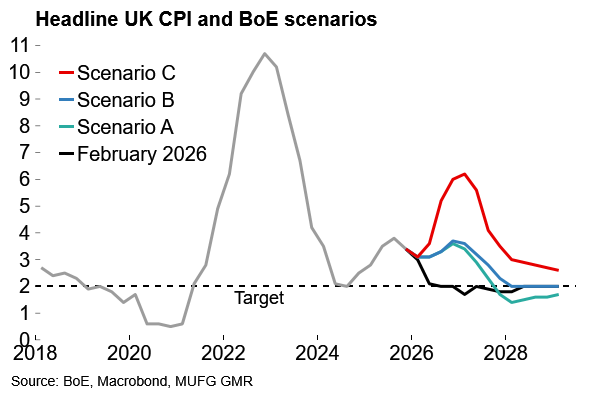
Economic forecasts presented by the BoE included three scenarios illustrating varying degrees of energy price persistence and inflation impact. The baseline scenario assumes energy prices follow current market futures, while other scenarios suggest higher and more persistent price levels that could push inflation above 6%. Most MPC members lean towards a scenario where inflation remains elevated for longer, justifying potential rate hikes later in the year.
Financial markets responded moderately to the BoE’s announcement, with gilt yields slightly decreasing and the pound appreciating against the dollar by around 0.7%. However, analysts warn that prolonged geopolitical tensions could increase volatility and put downward pressure on the pound. Mortgage holders face challenges as many will see monthly payments rise by approximately £80 over the next three years due to higher borrowing costs.
The BoE’s decision aligns with other major central banks such as the European Central Bank (ECB), which also held rates but signaled possible hikes ahead due to similar inflation concerns stemming from elevated energy prices. Both central banks stressed that future monetary tightening depends heavily on how energy costs evolve and whether second-round effects like wage increases take hold.
Looking ahead, economists predict at least one rate hike from the BoE as early as June if inflationary pressures persist or worsen. The bank’s messaging indicates a readiness to act decisively to control inflation despite risks to economic growth. Governor Bailey reiterated that maintaining price stability is crucial for economic confidence and long-term growth prospects.
In summary, while the BoE currently holds interest rates steady, it faces a challenging balancing act amid uncertain global energy markets and inflationary threats. Policymakers remain vigilant, prepared to adjust monetary policy swiftly should economic conditions demand it.