The AUD/USD exchange rate is currently under pressure as a combination of weak economic data from Australia and hawkish signals from the US Federal Reserve weigh on market sentiment. Investors are growing increasingly cautious about the potential for the Australian dollar to weaken further against the US dollar in the near term.
In the United States, the dollar briefly softened after reports surfaced about a possible draft agreement between the US and Iran. However, with no official confirmation, market attention remains fixed on strong US economic indicators and firm rhetoric from Federal Reserve officials. Recent minutes from the Federal Open Market Committee reveal a clear shift away from previous easing tendencies, with several members openly discussing the possibility of further interest rate hikes. This development suggests that the Fed could adopt a more aggressive stance at its upcoming June meeting if economic data continues to justify tightening measures.
Meanwhile, Australian economic signals point to mounting challenges. The Reserve Bank of Australia has raised its cash rate to 4.35%, but recent communications indicate a preference to pause further increases in order to assess their impact on growth and employment. Notably, the unemployment rate rose to 4.5%, reaching its highest level since late 2021. This uptick has led market participants to temper expectations for additional rate hikes. Furthermore, Australia’s Flash Purchasing Managers’ Index shows slowing economic activity, influenced by geopolitical tensions in the Middle East and tighter domestic monetary policy.
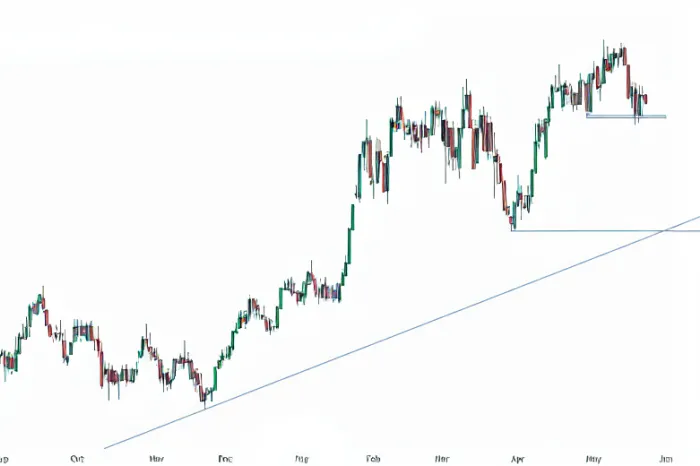
From a technical perspective, AUD/USD is consolidating just above a critical support level around 0.71 on daily charts. Traders are closely watching whether the pair will break below this level or push higher toward resistance near 0.7180. Short-term charts reveal a symmetrical triangle pattern following recent bearish trends, which often signals continued downward momentum if prices fall below support. Conversely, a decisive break above resistance would be needed to spark bullish sentiment.
Looking ahead, market participants are anticipating remarks from Federal Reserve officials, particularly Fed Governor Christopher Waller’s upcoming speech. Waller’s comments are expected to shed light on the Fed’s future policy direction. Given his significant role in this tightening cycle, any shift in his tone toward increased inflation concerns could bolster the US dollar and exert additional pressure on AUD/USD.
In conclusion, the Australian dollar remains vulnerable amid disappointing domestic data and an increasingly hawkish outlook from the Federal Reserve. Traders and investors should monitor key technical support levels and forthcoming US policy signals closely as they navigate these uncertain market conditions.