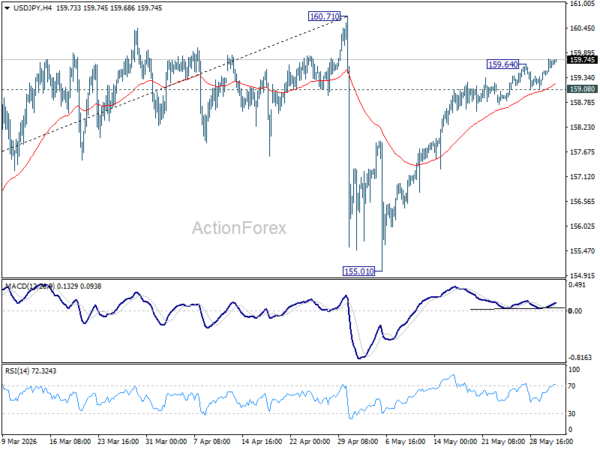
The Bank of Japan (BOJ) is under increasing pressure to raise interest rates in June and provide clearer guidance on its future policy path as the Japanese yen nears a critical threshold against the US dollar and government bond yields reach multi-decade highs. Market expectations are strong for a rate hike from the current 0.75% to 1.00%, with investors pricing in roughly an 80% chance of this move during the upcoming policy meeting. However, despite the anticipated tightening, the yen remains among the weakest major currencies, trading close to the intervention level of 160 yen per dollar, raising concerns about the effectiveness of a modest rate increase alone.
Experts highlight that a 25 basis point hike would do little to bridge the substantial yield gap between Japan and other economies, especially as global inflationary pressures persist amid elevated energy prices driven by ongoing conflicts in the Middle East. This situation complicates BOJ’s task, as higher oil costs push up global bond yields, undermining the attractiveness of the yen even if domestic interest rates rise. Market participants are calling for a clearer roadmap toward policy normalization rather than a single incremental step.
Arihiro Nagata, global markets chief at Sumitomo Mitsui Financial Group, emphasized that while a June hike is almost certain, the more important issue is how clearly the BOJ communicates its plans for further tightening. He argued that transparent guidance could help stabilize long-term bond yields by reducing uncertainty about future rate increases. Nagata also suggested that halting further tapering of Japanese government bond (JGB) purchases at around ¥2.1 trillion per month starting April 2027 would support market functioning without causing undue stress.
The BOJ has been gradually reducing its massive bond-buying program since 2024, aiming to lower monthly JGB purchases from about ¥5.7 trillion to approximately ¥2.1 trillion by early 2027. Yet rising long-term yields—pushed higher by reduced central bank demand, global yield increases, and concerns over Japan’s fiscal outlook—have complicated this process. While some voices within the BOJ advocate for maintaining or slowing tapering to avoid market disruption, others push for more aggressive reductions to restore normal market conditions.
Japan’s 10-year government bond yield recently climbed to around 2.58%, levels not seen in three decades, reflecting increased investor demands for compensation amid inflation and fiscal concerns. This rise raises borrowing costs for a government already burdened with significant debt, prompting calls from policymakers and market watchers for a cautious approach that balances inflation control with financial stability.
Meanwhile, repeated intervention warnings from Japanese officials underscore anxieties over the yen’s weakness near the critical 160 mark against the dollar. Despite significant efforts to defend this level—including ¥11.7 trillion spent on intervention last month—the currency’s vulnerability persists, fueled by uncertainty over global energy prices and geopolitical tensions.
As Japan approaches its June 15-16 BOJ meeting, all eyes are on how policymakers will navigate these challenges. A rate hike appears likely, but market participants want clear signals on subsequent moves to avoid further volatility in bond yields and currency markets. The central bank faces a delicate balancing act: tightening monetary policy enough to contain inflation while preventing disorderly financial conditions that could harm economic recovery.
In summary, Japan’s monetary policy outlook hinges not only on the immediate decision to raise rates but also on delivering a credible plan for normalization that reassures markets and supports sustainable economic growth amid ongoing domestic and international uncertainties.