Global financial markets entered a cautious phase last week as investors faced a trio of challenges: a sharp downturn in AI-related stocks, persistent worries about prolonged high US interest rates, and renewed conflict in the Middle East. These factors combined to create uncertainty across equities, bond yields, and currency markets.
The first shock came from the technology sector when Broadcom reported weaker-than-expected quarterly revenue. As a key supplier of chips to major AI companies, Broadcom’s results triggered widespread profit-taking across semiconductor and AI stocks. This selloff highlighted the risks of high valuations built on optimistic growth forecasts in the AI sector. Although demand for AI infrastructure remains strong, investors are now more cautious, focusing on companies’ actual earnings and execution rather than just their exposure to AI trends.
Simultaneously, the US labor market showed unexpected strength with job gains far exceeding expectations. This robust employment data reinforced confidence in the economy but also suggested that the Federal Reserve might keep interest rates elevated for longer than previously anticipated. The possibility of sustained higher rates has put pressure on risk assets, particularly technology stocks which had benefited from hopes of easier monetary policy.
Adding to market unease, military tensions escalated again near the Strait of Hormuz after US forces struck Iranian radar sites following drone attacks on shipping lanes. Iran retaliated with missile strikes on US bases in the Gulf region. Given that this waterway is crucial for global oil shipments, renewed conflict threatens energy supply stability and could push oil prices higher. Rising crude prices would add inflationary pressure worldwide and complicate central banks’ efforts to manage economic growth and price stability.
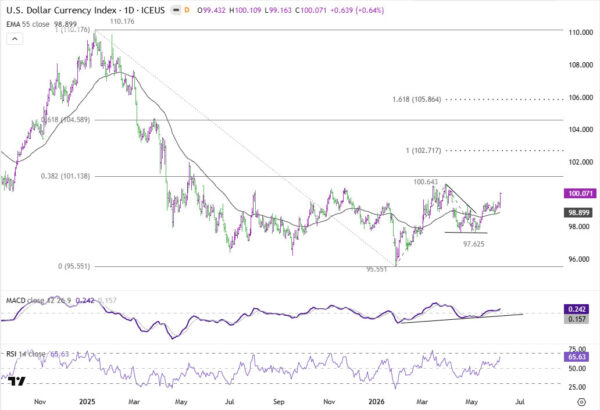
In currency markets, the US Dollar strengthened significantly, benefiting from its safe-haven status amid geopolitical risks and higher Treasury yields. The Dollar Index climbed above the key 100 level, supported by strong technical momentum and market expectations of sustained Fed policy firmness. Conversely, commodity-linked currencies like the New Zealand Dollar and Australian Dollar weakened as risk appetite declined.
Looking ahead, investors will closely watch inflation data and oil price movements for clues about the Federal Reserve’s next moves and global economic stability. Any further increases in energy costs could deepen inflation concerns and intensify market volatility. Meanwhile, technology stocks face critical technical tests that will influence broader equity trends.
Overall, forex traders must navigate a complex environment where geopolitical risks intersect with economic indicators and central bank policies. The coming weeks will be crucial in determining whether risk sentiment improves or if defensive positioning continues to dominate global markets.