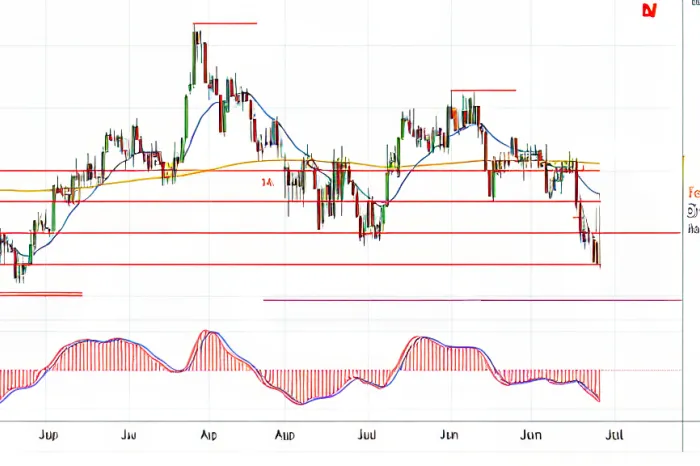
The GBP/USD currency pair has experienced renewed downward pressure, reaching fresh lows for the year amid a stronger US dollar and mixed economic signals from the UK and the US. Following a recent breakdown of a symmetrical triangle pattern, the pair has struggled to regain upward momentum, with key resistance levels holding firm.
On June 25, the pair settled around 1.3175 after briefly touching a year low near 1.3140. Market analysts note that despite some short-term consolidation, bearish momentum remains intact due to negative daily indicators and weak weekly charts. Resistance is expected near the 1.3200 level, but renewed selling interest could push the rate toward congestion zones between 1.3100 and 1.3000, with critical support identified around 1.2985.
The broader forex market reflects diverging monetary policies between major central banks. The Federal Reserve’s cautious stance on inflation has kept the US dollar strong, supported by solid domestic economic activity and its status as a global reserve currency. In contrast, the Bank of England faces challenges balancing inflation pressures with slowing growth in the UK economy, contributing to uncertainty around sterling’s outlook.
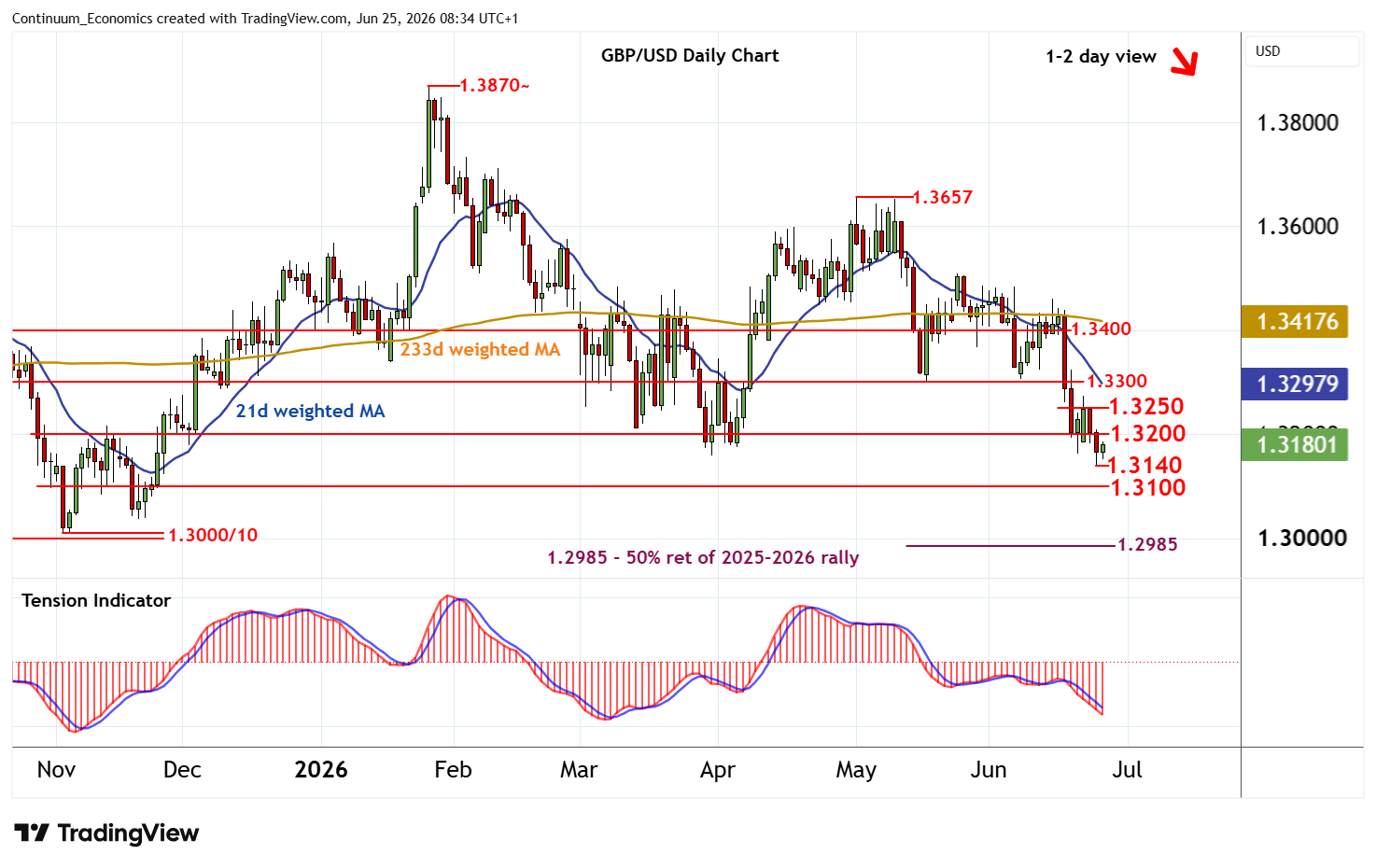
Technical analysis highlights that GBP/USD trades below key moving averages on short-term charts, signaling building selling momentum. The relative strength index (RSI) remains below neutral levels, suggesting further room for declines if bearish factors persist. Immediate support lies near 1.2580, with potential downside targets toward the 1.2500 to 1.2450 range if this level breaks.
Market participants are also watching the US dollar index (DXY), which recently retested support after breaking out of a triangle pattern, indicating sustained bullish sentiment for the greenback. This strength in the dollar places additional pressure on GBP/USD and other major currency pairs such as EUR/USD.
Despite these headwinds, some analysts point out that rallies in GBP/USD could face selling pressure until key resistance levels near 1.3250 are surpassed. The recent formation of a “death cross,” where the 50-day moving average crosses below the 200-day average, adds to the negative technical outlook.
Political uncertainties in the UK and ongoing economic data releases will continue to influence sterling’s performance in coming weeks. Traders are advised to monitor central bank communications closely, as any shifts in policy tone—especially from the Federal Reserve or Bank of England—could trigger volatility in exchange rates.
Overall, while short-term stabilization may occur around current levels, the prevailing trend for GBP/USD appears bearish amid stronger US dollar dynamics and mixed UK economic fundamentals.