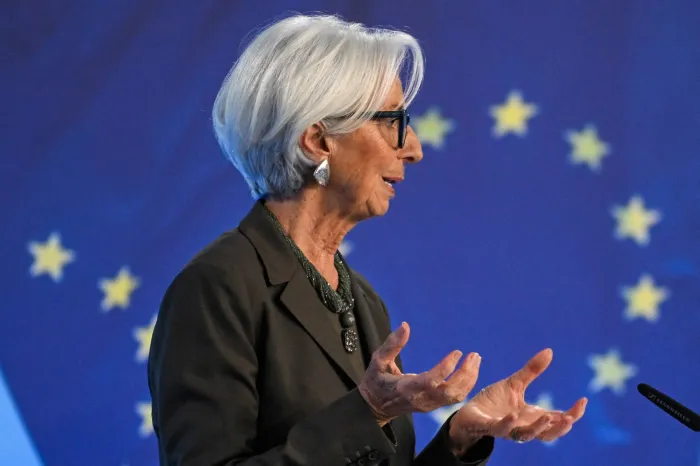
European Central Bank President Christine Lagarde has opened the door to an early exit from her leadership role ahead of her term’s scheduled end in October 2027. In a candid interview with the French newspaper Les Echos, Lagarde revealed that stepping down sooner is “possible” as she considers a return to French politics, specifically aiming to participate in the upcoming presidential election.
Lagarde underscored the critical importance of preserving a strong European perspective during France’s presidential campaign. She warned that if the national debate sidelines France’s role within Europe, it would be necessary to clearly explain how such a shift could negatively impact both the country and its citizens. While she stopped short of confirming whether she will run for president or endorse any candidate, Lagarde acknowledged that she is weighing her options and intends to engage with various contenders on France’s future within the European Union.
The French presidential election is set for 2027, with an initial round scheduled in April followed by a runoff if no candidate secures an outright majority. Current opinion polls highlight Jordan Bardella, leader of the far-right National Rally party, as a leading contender. Bardella advocates for a redefined relationship between France and the European Union, pushing for the EU and European Commission to prioritize national interests more explicitly. This approach stands in contrast to Lagarde’s pro-European stance and presents a challenge to her vision of France’s integration within Europe.
Since reports surfaced earlier this year suggesting Lagarde might leave her ECB post prematurely to facilitate the appointment of her successor by political leaders, she has reaffirmed her dedication to steering the ECB through ongoing economic uncertainties. Describing herself as “the captain of the ECB ship,” Lagarde emphasized her responsibility to remain at the helm during turbulent times to ensure price stability across the eurozone.
Beyond monetary policy, Lagarde expressed readiness to have open and honest conversations with presidential candidates, highlighting her commitment both to France and Europe. She cautioned that without robust ties to Europe, France’s economic prospects could become precarious. Meanwhile, the French government is advancing budget cuts aimed at curbing public debt and meeting European Union deficit targets by 2029, despite political divisions complicating reform efforts.
French Finance Minister Roland Lescure stressed the importance of separating fiscal negotiations from election-year politics to maintain financial discipline. Since President Emmanuel Macron’s re-election in 2022, France has experienced considerable political turbulence, including five prime ministers within four years, which has further complicated governance and reform initiatives.
Lagarde closed by urging presidential hopefuls to confront difficult economic realities with transparency. She noted that French voters expect candid discussions paired with practical solutions. As France approaches a pivotal election year, Lagarde’s potential involvement in national politics adds a compelling layer to debates about the country’s role in Europe and its economic trajectory.