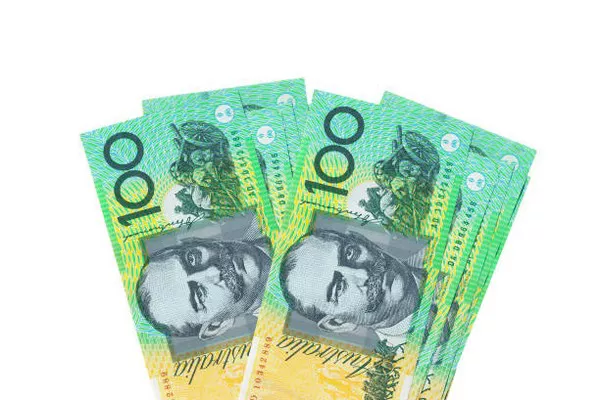
The Australian dollar slid against the US dollar on Monday, August 4, 2025, reaching its lowest level in three months as surging US Treasury yields and disappointing economic data from China weighed heavily on the currency pair. The AUD/USD exchange rate fell to 0.6450, marking a 0.8% decline from Friday’s close, as traders favored the greenback amid shifting global risk sentiment. The pair has now lost nearly 4% over the past month, reflecting growing concerns over Australia’s economic outlook and China’s sluggish recovery.
The primary driver behind the AUD/USD’s latest downturn was the continued strength of the US dollar, fueled by rising Treasury yields. The 10-year US Treasury yield climbed to 4.35%, its highest level since early May, as markets adjusted expectations around the Federal Reserve’s monetary policy. Strong US labor market data released last Friday reinforced the view that the Fed may delay interest rate cuts, keeping borrowing costs elevated for longer. Non-farm payrolls showed an addition of 215,000 jobs in July, surpassing estimates, while wage growth remained steady at 4.1% year-on-year. This robust employment backdrop has given the Fed little reason to ease policy prematurely, sustaining demand for the US dollar at the expense of risk-sensitive currencies like the Australian dollar.
Meanwhile, China’s economic struggles further pressured the AUD, given Australia’s heavy reliance on Chinese demand for its commodity exports. The latest Caixin Services Purchasing Managers’ Index (PMI) for July came in at 51.2, down from 53.9 in June and below market expectations of 52.5. This slowdown in China’s services sector, coupled with last week’s underwhelming manufacturing PMI, reinforced fears that the world’s second-largest economy is losing momentum. Analysts noted that weak domestic consumption and a prolonged property sector crisis continue to drag on growth, reducing China’s appetite for Australian iron ore, coal, and liquefied natural gas. As a result, Australia’s trade surplus narrowed more than anticipated in June, adding to the AUD’s bearish momentum.
Domestic factors also played a role in the AUD’s underperformance. The Reserve Bank of Australia (RBA) kept interest rates unchanged at 4.35% last week, maintaining a neutral stance amid mixed economic signals. While inflation remains above the central bank’s 2-3% target, softening retail sales and a cooling labor market have reduced the urgency for further rate hikes. RBA Governor Michele Bullock acknowledged that economic growth is slowing but emphasized that the board remains vigilant against upside inflation risks. However, markets interpreted the lack of hawkish guidance as a sign that the RBA’s tightening cycle may be over, diminishing the AUD’s yield appeal compared to the higher-for-longer US rates.
Technical analysts highlighted that the AUD/USD has broken below key support levels, opening the door for further downside. The pair’s breach of the 0.6500 psychological level suggests that bearish sentiment is firmly in control, with the next major support zone seen around 0.6400. Momentum indicators, including the Relative Strength Index (RSI), have entered oversold territory, but without a fundamental catalyst, any short-term rebound is likely to be limited. Traders are now closely watching upcoming US inflation data and Chinese trade figures for fresh directional cues.
Looking ahead, the AUD/USD’s trajectory will depend heavily on the interplay between US monetary policy expectations and China’s economic performance. If US yields continue to rise and Chinese data fails to improve, the pair could test multi-year lows in the coming weeks. Conversely, any signs of Fed dovishness or a stimulus-driven recovery in China could provide much-needed relief for the embattled Australian dollar. For now, however, the path of least resistance appears skewed to the downside.
You Might Be Interested In: