
 Anna
Anna 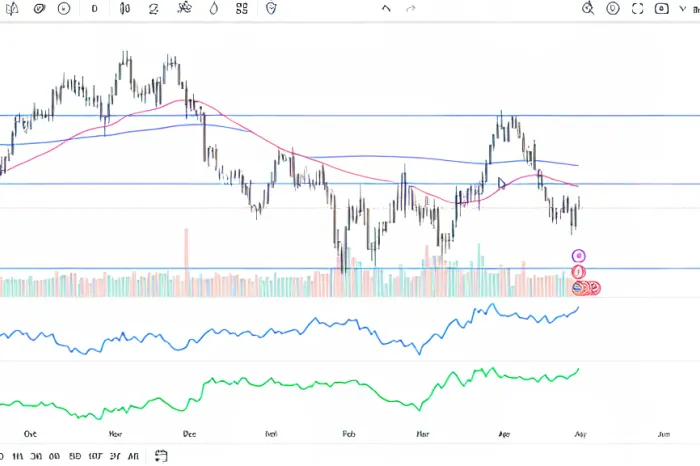
The USD/CAD currency pair is currently trading around CA$1.35847 as of early May 2026, showing signs of volatility influenced by a range of economic and geopolitical factors. This major Forex pair reflects the close trade relationship between the United States and Canada, with movements often tied to interest rate differentials, economic data releases, and fluctuations in global oil prices. Analysts continue to offer varied forecasts for the pair’s trajectory through 2026 and beyond, reflecting uncertainty in both economies and commodity markets.
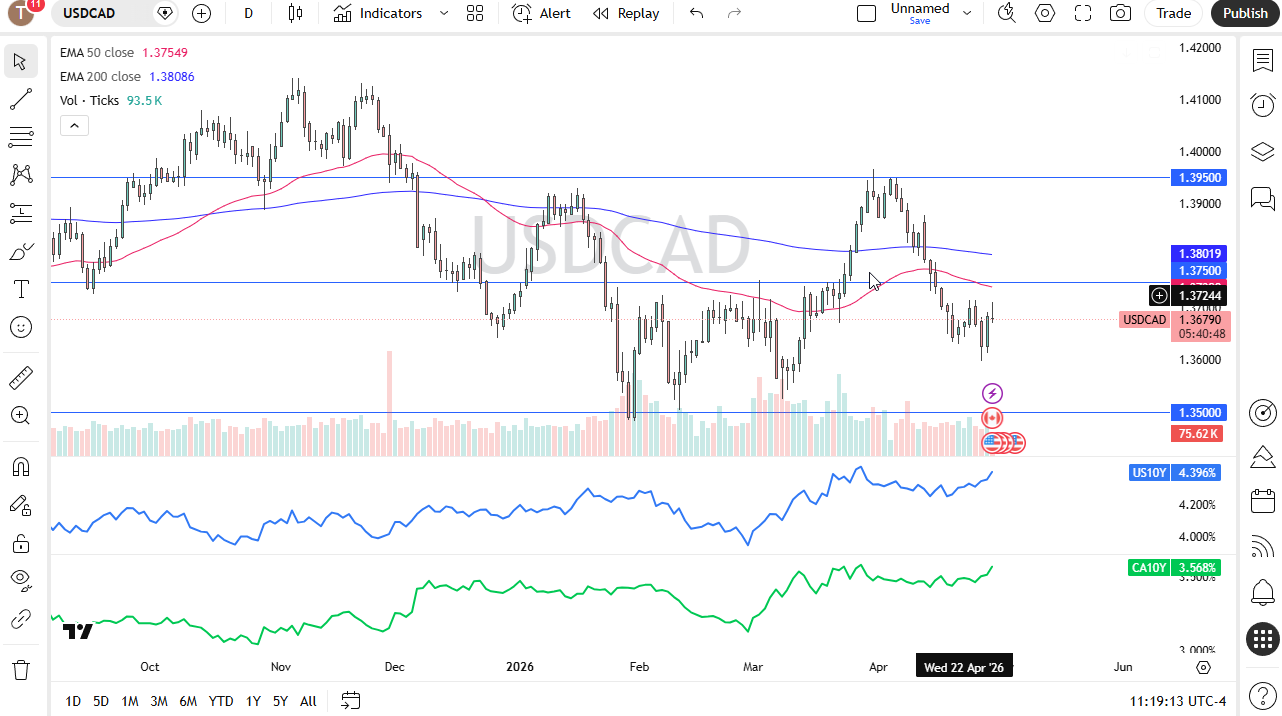
Recent technical analysis suggests that USD/CAD has been in a corrective phase since early April 2026, with key patterns indicating potential for both upward breakouts and downward pressure. A notable Falling Wedge pattern points to a possible rise toward the CA$1.4234 level or higher, while bearish momentum indicators such as the MACD and sideways RSI readings highlight market indecision. Support levels are identified near CA$1.3581 and below, while resistance ranges cluster around CA$1.3738 to CA$1.5078, creating a broad trading band for investors.
Fundamentally, the pair’s performance is heavily influenced by monetary policies from the US Federal Reserve and the Bank of Canada. The Bank of Canada recently maintained its overnight interest rate at 2.25%, signaling a neutral stance amid ongoing economic assessments. Meanwhile, US monetary policy continues to exert pressure on the dollar’s strength. Additionally, oil prices play a crucial role given Canada’s status as a major energy exporter; rising crude prices tend to strengthen the Canadian dollar, potentially pushing USD/CAD lower.
Market sentiment remains divided. Some experts forecast a decline in USD/CAD toward CA$1.3200 by year-end 2026 due to a strengthening Canadian economy and buoyant oil prices. Conversely, geopolitical uncertainties and fluctuating US economic indicators leave room for the pair to rebound toward CA$1.3890 or higher. Forecasts for 2027 through 2030 also vary widely, with expectations ranging from moderate depreciation near CA$1.1900 to potential increases above CA$1.4000 depending on global economic conditions.
Short-term trading has seen consolidation between CA$1.36 and CA$1.3720, with price action constrained by technical resistance near the 50-day exponential moving average around CA$1.3750. Analysts caution that this range-bound movement could persist until clearer market drivers emerge, such as shifts in central bank policies or significant changes in oil markets.
In summary, the USD/CAD exchange rate remains subject to multiple competing influences including interest rate differentials, commodity prices, and geopolitical developments. Traders should consider both technical signals and fundamental data when making decisions, recognizing that volatility is likely to continue in the near term. Long-term investors are advised to weigh risks carefully and stay informed on evolving economic conditions in both countries.
