The AUD/USD currency pair has experienced a complex trading environment recently, influenced by Australia’s inflation data, geopolitical developments, and shifts in global risk sentiment. April’s Consumer Price Index (CPI) in Australia rose to 4.6%, missing the forecasted 4.8% but still remaining significantly above the Reserve Bank of Australia’s (RBA) comfort zone. This inflation reading highlights persistent price pressures in housing, transport, food, and household services sectors. Particularly, transport costs are under strain due to rising oil prices fueled by ongoing tensions in Iran.
Traders have interpreted this inflation data as a mild relief for the Australian dollar bulls since it reduces the likelihood of an aggressive interest rate hike by the RBA. However, inflation remains sticky enough to sustain expectations for further monetary tightening, providing underlying support for the AUD/USD pair. The Reserve Bank faces a delicate balancing act — it cannot afford to ease policy too soon but also must avoid overt panic amid the inflation environment.
The broader forex market dynamics have been shaped by a cautious US dollar that found safe-haven demand ahead of the Federal Reserve’s policy announcement. The Fed opted to hold interest rates steady between 3.50% and 3.75%, signaling a wait-and-see approach amid geopolitical uncertainties and economic risks tied to the Iran conflict. This cautious stance has limited upward momentum for the dollar but kept it supported near recent highs, capping gains for AUD/USD.
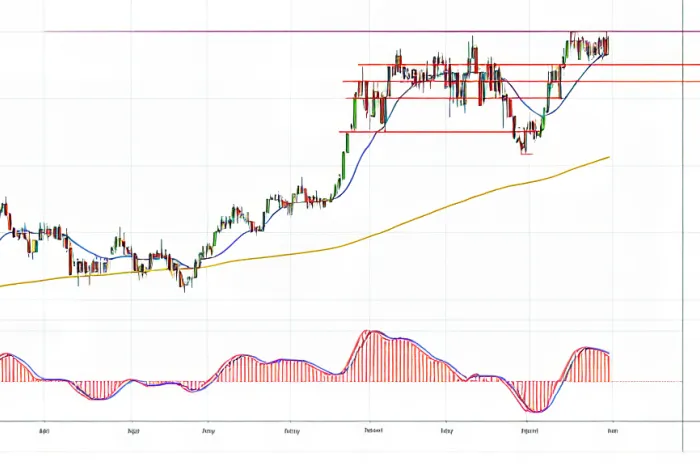
Technical analysis reveals that AUD/USD has been trading in a tight range between approximately 0.7100 and 0.7220 over the past weeks. The pair recently retreated from a year-to-date high near 0.7195 down toward the 0.7120 level, forming a double-top pattern on daily charts that suggests potential bearish pressure in the short term. Key support levels around 0.7000 and resistance near 0.7200 remain critical battlegrounds for traders deciding the next directional move.
Further complicating the outlook are rising crude oil prices, with Brent crude surpassing $119 per barrel due to heightened tensions following US-Iran diplomatic breakdowns and ongoing blockades. Elevated oil prices contribute to inflationary pressures globally and reinforce hawkish expectations from central banks, including both the RBA and Federal Reserve.
Looking ahead, market participants are watching for several key triggers that could influence AUD/USD’s trajectory: any hawkish comments from Federal Reserve Chair Jerome Powell, fresh inflation data from both Australia and the US, developments in US-Iran relations, and earnings reports from major US technology companies which impact global risk appetite.
Overall, while the Australian dollar shows resilience supported by robust Chinese business activity and persistent inflation concerns that keep rate hike prospects alive, it faces headwinds from a firm US dollar and geopolitical risks. The pair is poised to oscillate within established technical ranges unless a clear catalyst emerges to push it decisively beyond resistance or support levels.