Russia has announced it will begin buying foreign currency on the forex market for the first time since its conflict with Ukraine began. This move, set to take place from May 8 to June 4, comes as Moscow experiences increased revenues from crude oil exports due to disruptions in the Middle East, particularly related to the war involving Iran.
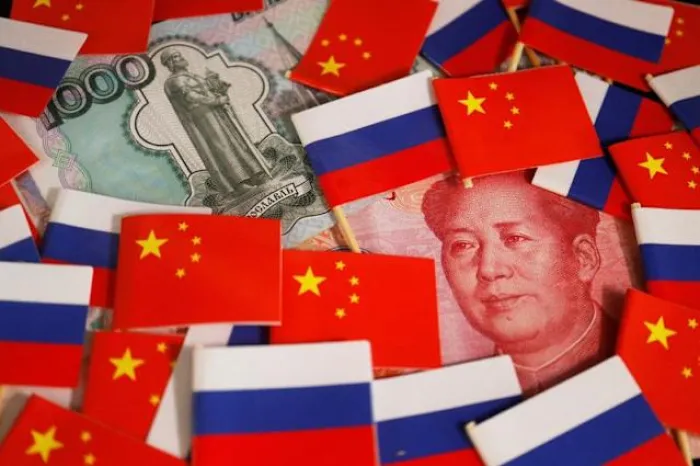
The Russian Finance Ministry stated that it plans to purchase foreign currencies worth 110.3 billion roubles (approximately $1.46 billion), primarily Chinese yuan, for the National Wealth Fund. This fund is designed to stabilize Russia’s budget and prevent excessive strengthening of the rouble. Despite this announcement, the rouble actually strengthened by 0.9% against the yuan in Moscow’s currency exchange, surprising traders who had anticipated more aggressive foreign currency buying by the government.
The central bank will handle these purchases, which translate to a net state acquisition of about 1.18 billion roubles per day. This is significantly lower than current sales of 4.6 billion roubles per day and also less than analysts’ expectations. Economists at T-Investment had forecast daily purchases between 14 and 18 billion roubles, but Sofya Donets, the chief economist, suggested that oil and gas revenues were not as high as anticipated in April.
Several factors contributed to this reduced revenue windfall. Ukrainian drone attacks on Russian ports and refineries in April forced cuts in oil production, limiting Russia’s ability to fully capitalize on rising global oil prices exceeding $100 a barrel. Additionally, increased budget payouts to oil companies aimed at controlling domestic petrol prices—amounting to 208 billion roubles—and excise duty rebates further reduced extra revenues. Data revealed that Russia only gained an additional 21 billion roubles from oil in April.
Russia’s government follows a budget rule where foreign currency purchases for the National Wealth Fund are made when oil prices exceed a set cut-off price, currently $59 per barrel. If prices fall below this level, the government sells foreign currency reserves to cover budget shortfalls. Due to sanctions-related discounts on Russian oil earlier this year, the ministry paused these operations in February to avoid depleting reserves.
However, after oil prices surged following disruptions at the Strait of Hormuz caused by U.S. and Israeli attacks on Iran, many analysts questioned why forex purchases were not resumed sooner. The Finance Ministry explained that deferred transactions from March and April would be considered when calculating May’s purchase volumes, which would help soften market impacts.
According to finance ministry data released on May 6, state revenues from oil and gas fell by 21.2% year-on-year in April but showed improvement compared with March figures. In summary, while Russia has restarted forex market purchases fueled by higher oil earnings amid Middle East tensions, the volume is lower than expected due to production disruptions and budgetary support measures.