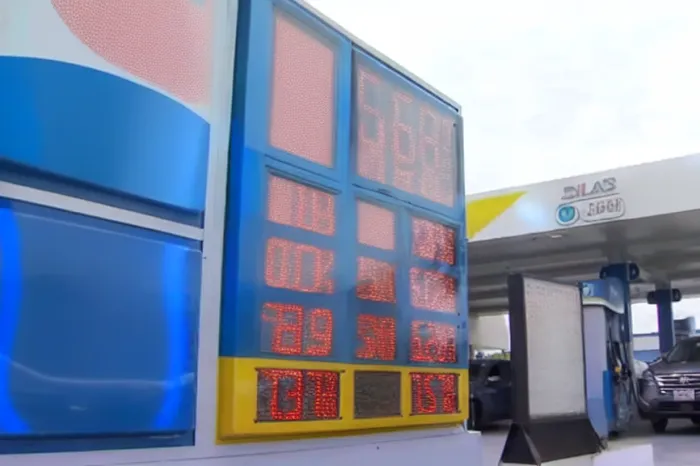
A recent report from the Federal Reserve Bank of New York highlights the growing financial burden that rising gasoline prices are placing on lower-income American households. The study reveals that while wealthier families have been able to maintain their fuel consumption despite higher costs, those earning less than $40,000 annually are cutting back on gas usage but still facing increased overall spending.
The research examined household gasoline spending during the energy price surge in March 2026, following geopolitical tensions in the Middle East. It found that lower-income consumers reduced their gas consumption by about 7%, yet their nominal spending on gasoline rose by 12%. In contrast, high-income households—defined as those earning over $125,000 per year—only slightly reduced consumption by 1% but increased their gas expenditures by 19%. Middle-income groups fell somewhere in between these extremes.
This disparity reflects what economists call a “K-shaped” economic pattern, where higher-income groups continue to prosper while lower-income families experience stagnation or decline. The Fed researchers pointed out that this trend has intensified since the pandemic began, with inflation rising faster than wage growth for many Americans. Since March 2020, consumer prices have climbed approximately 28%, but average hourly earnings have only increased about 30%, leaving real wages largely flat.
The report also draws parallels to a similar energy price shock in 2022 after Russia’s invasion of Ukraine but notes that the current gap between income groups is even more pronounced. The recent conflict in the Middle East has pushed gasoline prices up by roughly 50% since late February, exacerbating economic pressure on households least able to absorb these costs.
Lower-income Americans appear to be adopting strategies like carpooling, using public transportation where available, or reducing nonessential trips to manage expenses. However, these adjustments come with sacrifices and may limit discretionary spending on other goods and services. Data from other financial institutions support this finding, showing that some low-income households now spend as much as 10% of their income on gasoline—far above the average for wealthier Americans.
The Fed’s findings underscore the uneven impact of inflation and energy costs across different segments of society. While upper-income households benefit from rising asset values and can better shield themselves from price shocks, lower-income families bear a heavier financial load. This growing divide raises concerns about broader economic resilience and highlights challenges for policymakers aiming to support vulnerable populations during periods of inflationary pressure.
Overall, total spending at gas stations increased by 15% in March alone, indicating that the surge in fuel prices is siphoning money away from other areas of the economy. Although consumer spending adjusted for inflation showed only a slight increase during this period, the strain on lower-income households suggests potential risks for future economic growth if high energy costs persist.
The New York Fed’s analysis provides important insight into how inflation and global events are shaping consumption patterns in America today. It calls attention to the need for targeted measures to ease the burden on those most affected by rising living costs while acknowledging that wealthier groups continue to experience gains amid ongoing economic uncertainty.