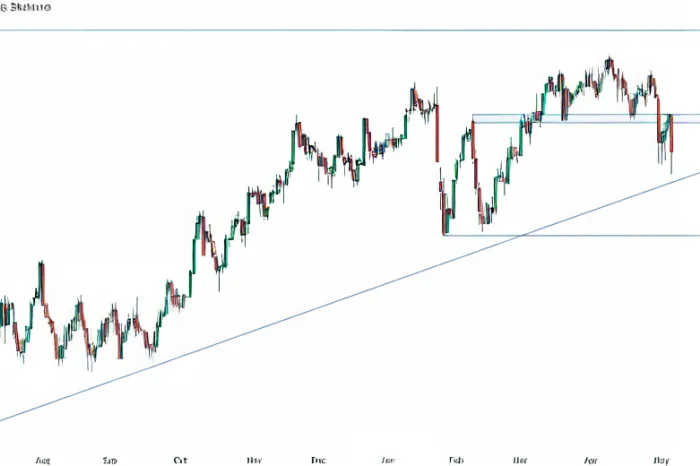
The USD/JPY currency pair has recently experienced notable volatility, hitting its lowest point in over two months near the 155.00 level. This sharp decline follows multiple interventions by Japanese authorities aimed at supporting the yen amid persistent selling pressure. The latest drop, occurring during a Japanese market holiday, has revived speculation of a second round of intervention after Japan reportedly spent approximately $34.5 billion in late April to strengthen its currency.
The yen’s sudden surge against the US dollar comes as fundamental factors continue to weigh heavily against it. Despite repeated efforts by Japan’s Ministry of Finance to curb the yen’s weakness, the interventions have faced challenges due to an unfavorable economic backdrop, including ongoing geopolitical tensions and inflation concerns. Market observers note that the yen remains under pressure because of these macroeconomic headwinds.
Technical analysis highlights a bearish breakdown from an ascending wedge pattern on the USD/JPY charts. The pair slipped below a key support zone around 158.00 following the initial intervention and briefly dropped below its long-term upward trendline before rebounding slightly. This rebound is seen more as a corrective move within a short-term downtrend rather than a sign of sustained recovery.
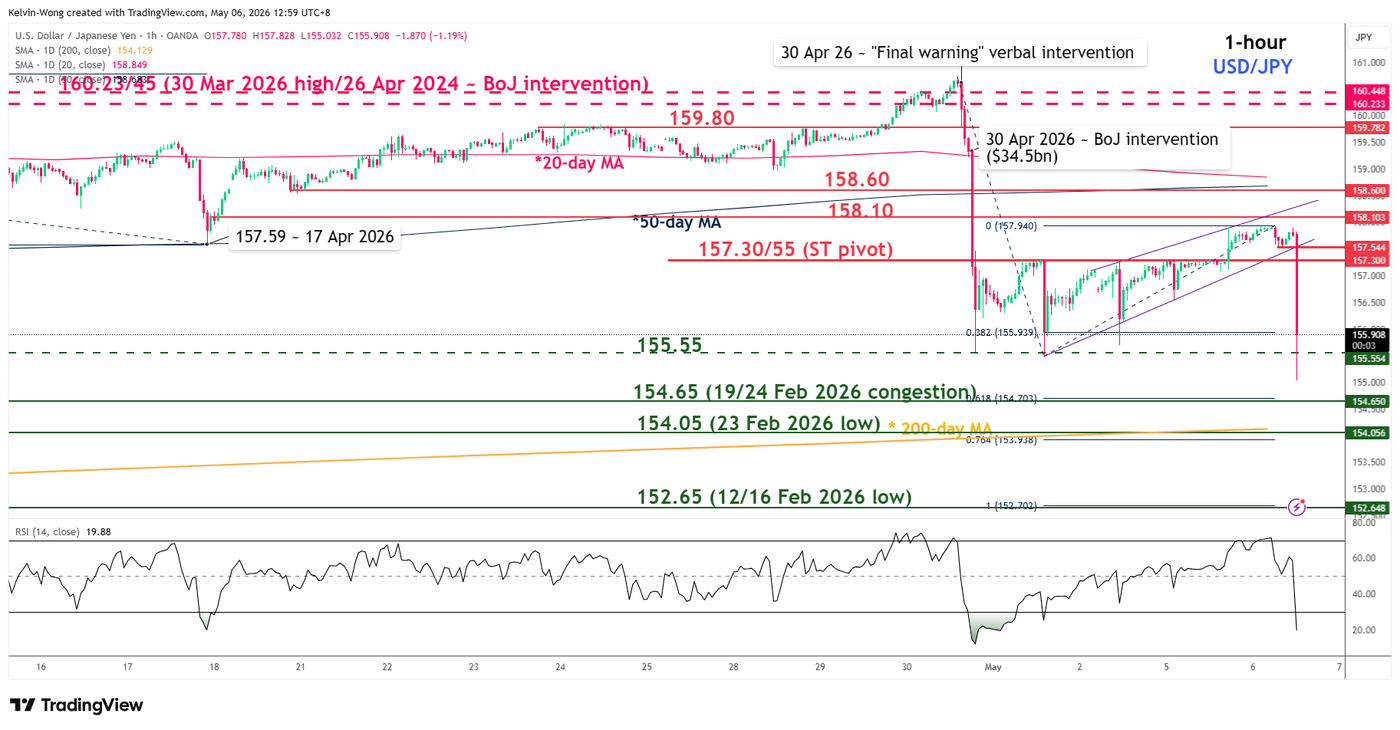
Momentum indicators such as the Relative Strength Index (RSI) and Moving Average Convergence Divergence (MACD) suggest a bearish bias in the near term. Resistance clusters near the 158.00 to 158.80 range continue to cap any upside attempts, while support levels around 155.00 to 156.40 remain crucial for preventing further declines. A decisive break below these support levels could open the door for additional losses toward longer-term moving averages near 154.00.
Market participants are closely watching upcoming economic data releases that may influence USD/JPY movements. Key reports include the US ADP employment data, jobless claims figures, Japanese wage data, and the US Non-Farm Payrolls report scheduled later this week. Additionally, developments in US-Iran negotiations have impacted dollar sentiment, with recent progress towards a potential agreement contributing to dollar weakness and adding complexity to yen dynamics.
Looking ahead, analysts suggest that unless there is a significant shift in fundamental conditions or further aggressive intervention by Japanese authorities, the yen’s downward pressure may persist. The Bank of Japan’s recent decision to maintain its interest rates and cautious stance on inflation adds another layer of uncertainty to the currency’s outlook. Ultimately, traders remain wary as they weigh intervention efforts against broader economic trends influencing USD/JPY exchange rates.