
 Anna
Anna 
The Australian dollar has shown notable strength against the US dollar, breaking above the 0.72 level as the Reserve Bank of Australia (RBA) signaled a pause in its tightening cycle after three consecutive interest rate hikes. This development has captured market attention, driven by a mix of central bank policy shifts and geopolitical factors affecting global risk sentiment.
The RBA’s decision to pause its rate increases has reinforced the Australian dollar’s appeal, especially in a market environment where the US dollar has weakened due to softer labor data and expectations of a more accommodative Federal Reserve stance. The widening yield differentials have made the AUD an attractive currency for investors seeking higher returns amid improving risk appetite.
At the same time, geopolitical tensions in the Middle East, particularly the ongoing conflict involving Iran and disruptions around the Strait of Hormuz, have pushed crude oil prices sharply higher. Brent crude recently surged past $119 per barrel, with West Texas Intermediate also reaching elevated levels. These developments have contributed to inflationary pressures in Australia, as reflected in the latest Consumer Price Index (CPI) report showing an increase from 3.7% to 4.6%, intensifying concerns about sustained inflation above the RBA’s target range.
Technically, the AUD/USD pair has experienced a bullish breakout but also faces some resistance near recent highs around 0.7230. Analysts note that while the current momentum favors further gains, a pullback toward support levels between 0.7130 and 0.7160 is possible if fresh catalysts do not emerge ahead of key upcoming data releases such as US Non-Farm Payrolls and GDP figures.
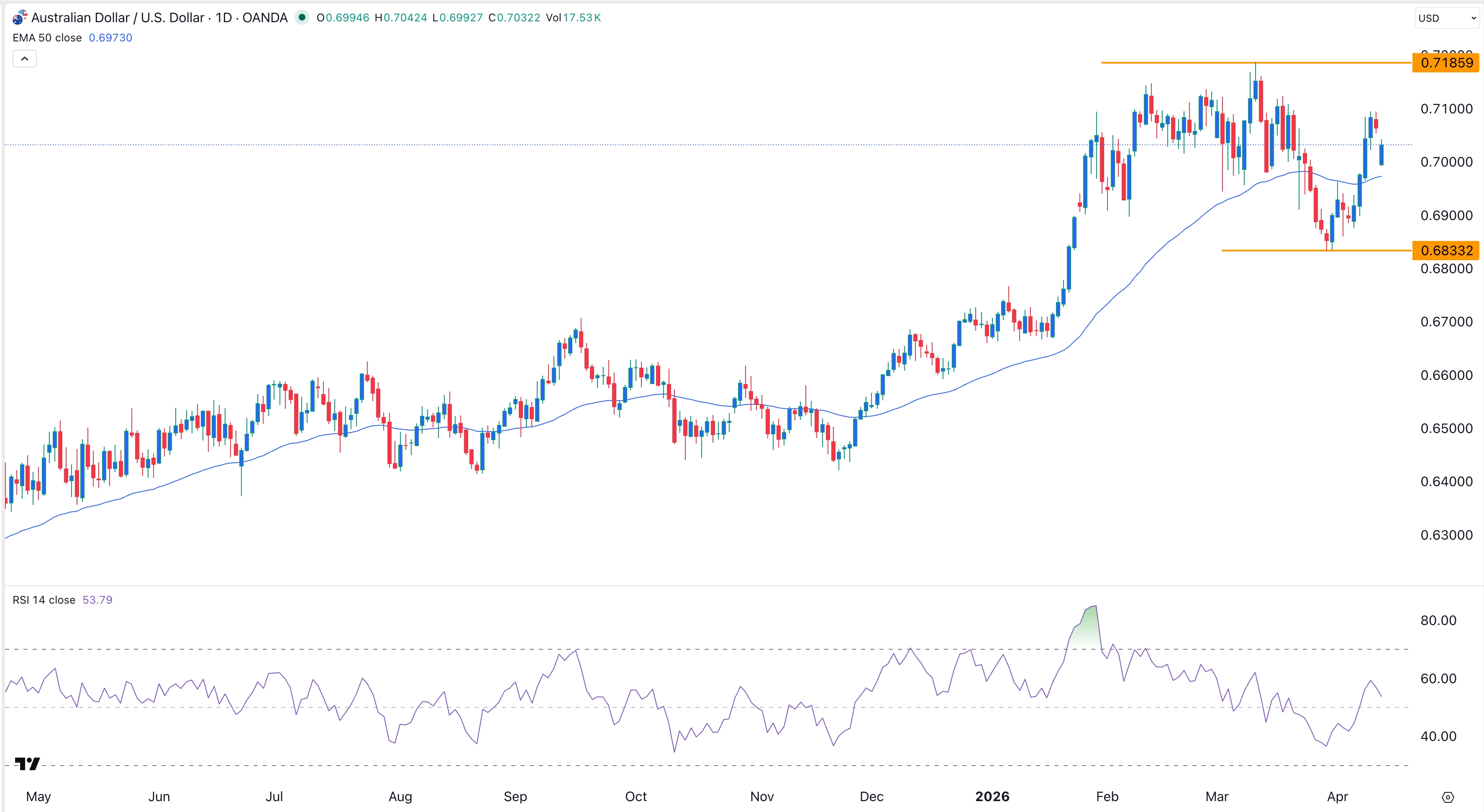
Market participants are closely monitoring these economic indicators as they could influence Federal Reserve policy decisions and impact the US dollar’s trajectory. Meanwhile, Australian dollar pairs like AUD/CAD have also reached multi-year highs, reflecting broad strength in commodity-linked currencies supported by central bank policies and improving global risk sentiment.
In summary, the AUD/USD exchange rate is navigating a complex landscape shaped by the RBA’s monetary stance, geopolitical risks elevating oil prices, and shifts in global risk appetite. Investors remain cautious but optimistic as they await critical macroeconomic data that will likely dictate the next phase of movement for this key currency pair.
