Federal Reserve officials have recently indicated a growing readiness to raise interest rates again if inflation fails to ease. Governor Lisa Cook expressed concern that inflation is moving in the wrong direction and said she would support increasing borrowing costs should price pressures persist. Although Cook currently favors maintaining steady rates, she aligns with other Fed members who view accelerating inflation as a more urgent issue than the labor market.
The arrival of Kevin Warsh as the new Federal Reserve chair has stirred speculation about the central bank’s future policy moves. Some market watchers initially hoped his leadership might bring interest rate cuts, as Warsh is seen as more open to reducing rates compared to his predecessor, Jerome Powell. However, ongoing geopolitical tensions, such as the conflict involving Iran, continue to fuel inflation fears, making rate cuts unlikely in the near term. Market tools now suggest there is about a 70% chance of at least one rate increase before the end of 2026.
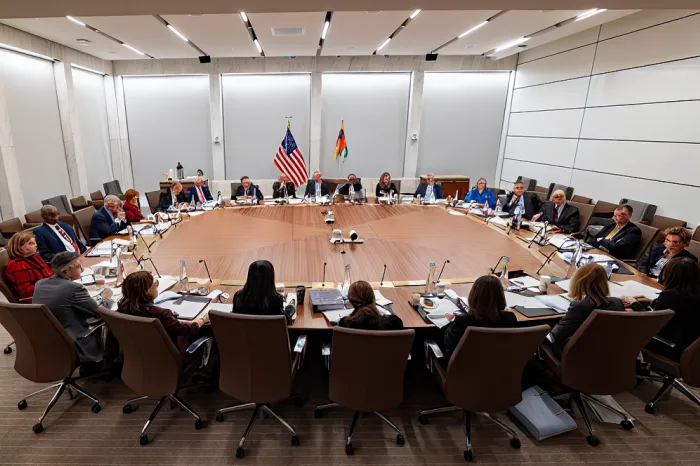
Warsh’s influence on monetary policy decisions, while significant, depends on persuading other members of the Federal Open Market Committee (FOMC). This committee includes seven Board of Governors members and several regional Federal Reserve Bank presidents who vote on interest rate changes. A sustained rise in inflation would make it difficult for many members to support lowering rates despite political pressures.
Inflation concerns prompted a series of rapid interest rate hikes by the Fed in 2022 and 2023. Since then, the central bank has adopted a cautious approach, opting for smaller adjustments amid economic uncertainty caused by trade tensions and global conflicts. Some experts argue that the Fed’s interventions have sometimes worsened market conditions by either fueling inflation or creating difficulties for consumers when rates are too high.
Mortgage markets are also affected by expectations about Fed policy. Mortgage rates have already reached their highest levels since last August and could climb further if investors anticipate additional rate hikes. While mortgage rates do not move directly in step with Fed decisions, market sentiment around monetary policy heavily influences borrowing costs for consumers.
The upcoming Federal Reserve meeting scheduled for mid-June will provide clearer signals about the direction of interest rates under Warsh’s leadership. His public comments following this meeting are expected to shed light on whether the central bank will maintain its cautious stance or pursue more aggressive hikes. Observers remain cautious, noting that abrupt or repeated rate increases could disrupt financial markets and harm economic growth.
Overall, while some hope for relief through lower interest rates, current economic indicators and geopolitical risks suggest that controlling inflation remains the Federal Reserve’s priority. The balance between supporting economic stability and curbing price rises will continue to shape Fed policies in the months ahead.