
 Anna
Anna 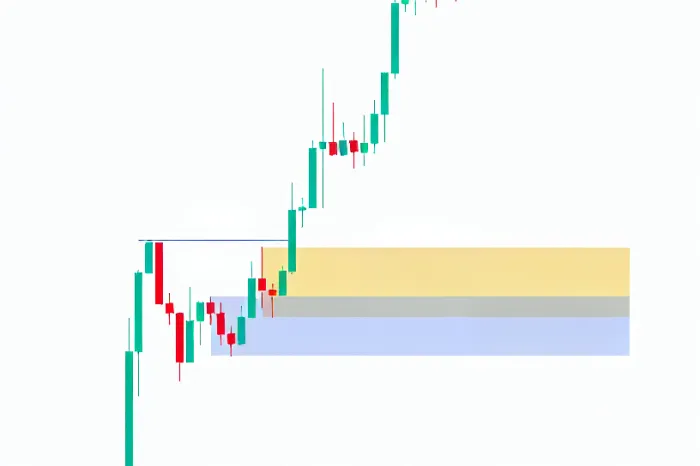
The forex market continues to experience significant movements influenced by institutional order flows and central bank policies, shaping currency valuations worldwide. Large financial institutions such as banks, hedge funds, and investment firms execute massive trades that have a profound impact on currency pairs, creating opportunities and challenges for retail traders who seek to align with these market flows.

Understanding the role of institutional order flow is essential for traders aiming to navigate the forex market effectively. These sizable transactions often dictate price movements through volume surges, timing, and distinct price actions. Retail traders who can identify patterns associated with institutional activity stand a better chance of predicting trends and avoiding counterproductive trades.
Recent developments in the US dollar exemplify the influence of monetary policy on forex markets. The US dollar gained strength following hawkish remarks from Federal Reserve Chair Jerome Powell during an International Monetary Fund panel. Powell’s indication that the Federal Reserve has yet to achieve a sufficiently restrictive stance to curb inflation sent yields higher and bolstered the greenback. This momentum was reflected in a near 0.4% rise in the DXY index.
The implications of Powell’s comments are far-reaching for major currency pairs. The EUR/USD pair experienced a pullback after failing to breach key resistance levels, while USD/JPY surged past important thresholds but faces potential intervention from Japanese authorities to stabilize the yen. Similarly, AUD/USD retreated after a false breakout, highlighting the volatility fueled by shifting market sentiment amid ongoing economic uncertainty.
Gold prices also reacted to these dynamics, pulling back from critical resistance zones but finding support near its 200-day moving average. The precious metal’s future direction will likely depend on upcoming inflation data and overall risk appetite in financial markets.
On a regional level, currency fluctuations remain pronounced. The Ghanaian cedi weakened further against the US dollar, trading lower both at forex bureaus and on the Bank of Ghana interbank market. Such depreciation reflects broader trends of emerging market currencies facing pressure amid global economic shifts and tighter monetary conditions in developed economies.
These developments underscore the necessity for forex traders to monitor institutional activity and central bank signals closely. Economic reports such as consumer price indices will continue to influence trading strategies as markets adjust to evolving inflation expectations and policy responses. Aligning trades with institutional flows and understanding technical barriers can improve decision-making in this complex environment.
Overall, the forex market remains highly sensitive to macroeconomic factors and large-scale financial operations. Traders equipped with knowledge of institutional order flow and monetary policy impacts are better positioned to navigate volatility and capitalize on emerging opportunities across currency pairs.
