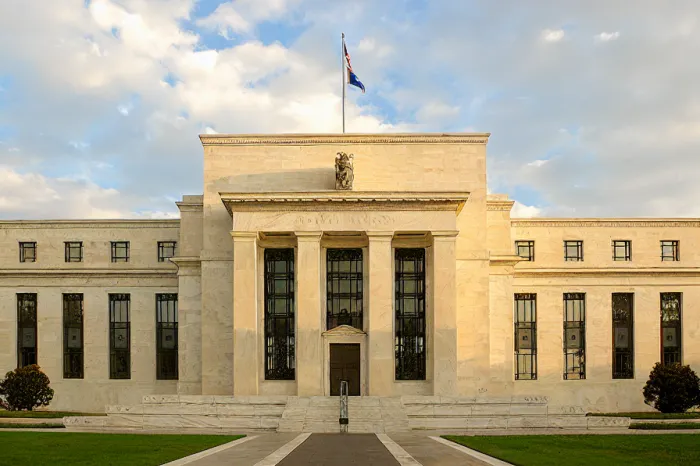
During the 1980s, the Federal Reserve employed a unique demand-driven approach to monetary policy, known as borrowed-reserves targeting. This method involved deliberately keeping the banking system short of reserves, requiring banks to borrow from the Fed’s discount window to meet their reserve needs. Unlike today’s common supply-driven strategies where central banks hold ample securities and provide abundant reserves, the Fed’s approach aimed to influence interest rates by controlling borrowing levels rather than setting explicit rate targets.
Under this framework, the Federal Open Market Committee (FOMC) set targets for the amount of discount window borrowing rather than directly targeting the federal funds rate. The relationship between borrowing and the federal funds rate was used to indirectly achieve desired interest rate levels. As borrowing increased, so did the spread between the federal funds rate and the discount rate, which was set below market rates at the time. Banks were reluctant to borrow frequently due to administrative pressures, so borrowing rose gradually as rates increased.
The demand-driven policy was a response to challenges with previous approaches that targeted interest rates directly. Prior to 1979, targeting a fixed federal funds rate range contributed to inflationary pressures because it did not automatically adjust in response to rising inflation. The shift away from direct rate targeting was also motivated by communication and decision-making difficulties within the FOMC, where debates over incremental rate changes slowed policy responses. By targeting borrowed reserves instead of rates, large market-driven interest rate movements could occur without requiring constant committee votes.
However, this approach faced operational challenges. The link between borrowing targets and actual federal funds rates was unstable due to changes in banks’ willingness to borrow from the discount window. For example, during financial distress events like Continental Illinois’s funding problems in 1984, larger banks avoided borrowing to prevent negative perceptions, pushing market rates higher than expected. Such shifts made it difficult for the Fed to predict and control short-term interest rates accurately.
The borrowed-reserves targeting era ended after a notable incident in 1989 called the “Thanksgiving Turkey.” A routine increase in reserves before Thanksgiving was misinterpreted by markets as a policy easing, causing confusion about the Fed’s intentions. This event highlighted how fragile and opaque the communication of policy targets had become under this system. By then, it was widely understood that the Fed’s daily operations effectively signaled its intended funds rate, even though official targets were not publicly disclosed.
Today’s central banks adopting demand-driven approaches differ from the Fed’s past model in one key aspect: their lending rates are set above prevailing money market rates to avoid stigma associated with borrowing. They aim to make lending facilities routine and stigma-free so that banks willingly use them without fear of reputational harm. This design attempts to prevent problems similar to those that undermined the Fed’s approach in the 1980s.
Experts caution that instability in banks’ willingness to borrow remains a risk for demand-driven policies. If banks become reluctant or more willing to borrow due to changes in supervisory attitudes or financial health perceptions, market interest rates could move unexpectedly. The Bank of England, European Central Bank, and Reserve Bank of Australia are actively working on minimizing such risks through facility design and supervisory culture adjustments.
The Fed’s historical experience demonstrates both benefits and pitfalls of demand-driven monetary policy. While it provided an indirect way to influence rates and reduced committee voting burdens during volatile times, it also exposed challenges related to communication transparency and unpredictable bank behaviors. These lessons remain valuable as modern central banks navigate complex monetary environments amid evolving financial markets.