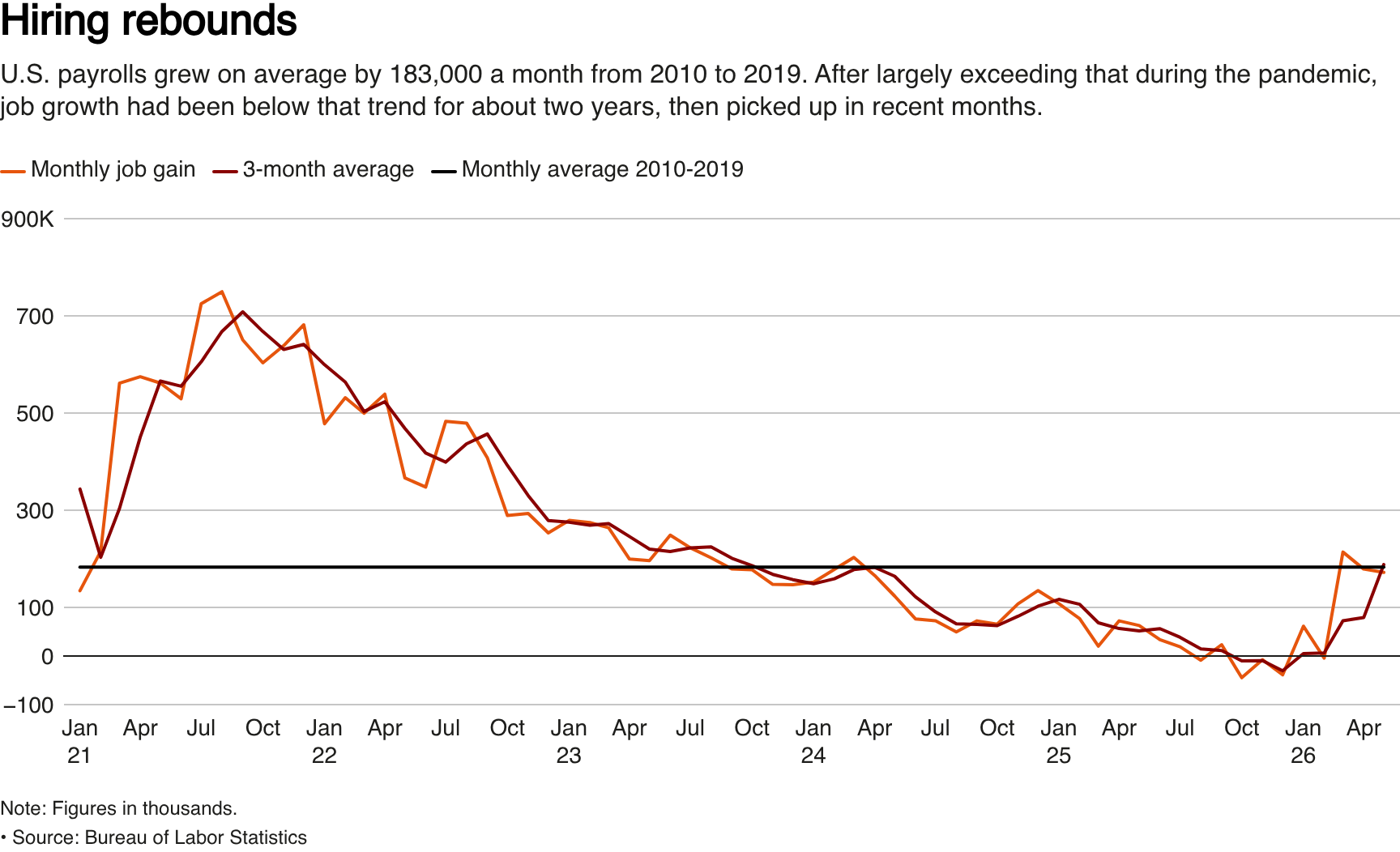
The United States economy showed stronger-than-expected job growth in May, adding 172,000 jobs, which has significantly increased market expectations for Federal Reserve interest rate hikes later this year. The unemployment rate remained steady at 4.3%, indicating a stable labor market despite the robust hiring. This data was released by the Bureau of Labor Statistics and exceeded economists’ forecasts, which had predicted a more modest increase.
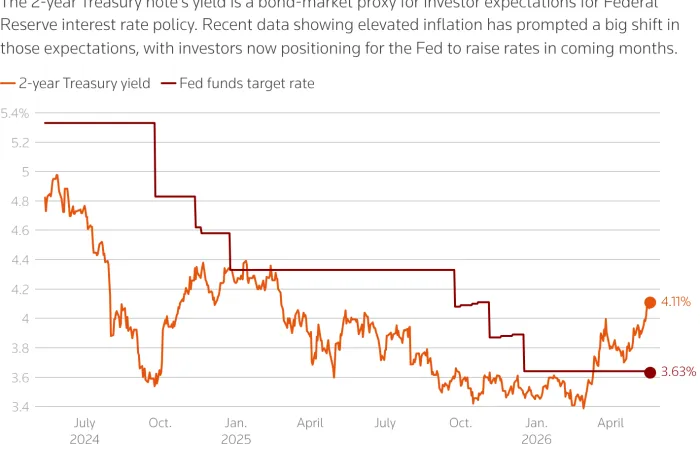
Following the report, bond markets reacted sharply with Treasury yields rising across various maturities. The yield on two-year Treasury notes, which are closely watched as indicators of Federal Reserve policy expectations, jumped to 4.17%, marking its largest single-day increase in over a year. Yields on five-year and ten-year notes also climbed, reaching 4.55% on the ten-year bond, reflecting growing confidence that the Fed may raise borrowing costs to combat persistent inflation.
Market tools such as interest-rate swaps and prediction platforms like Kalshi now show over a 50% chance of at least one Fed rate hike before the end of 2026, with a notable probability of a quarter-point increase as soon as October or December. This marks a significant shift from earlier in the year when markets expected rate cuts. The surge in inflation, partly driven by higher energy prices linked to ongoing tensions in the Middle East, has complicated the Fed’s policy outlook.
Stock markets responded negatively to the jobs data and rising rate hike odds. The Nasdaq Composite fell more than 4%, marking its worst day since April 2025, while the S&P 500 dropped 2.64%, ending a nine-week winning streak. Investors moved away from risk assets such as technology stocks, cryptocurrencies like Bitcoin—which fell below $60,000—and gold, which erased gains made earlier in the year due to concerns about higher interest rates.
Federal Reserve officials have expressed mixed views but increasingly warn that interest rates might need to rise if inflation remains above target levels. Dallas Fed President Lorie Logan and Cleveland Fed President Beth Hammack highlighted concerns that current monetary policy may not sufficiently restrain inflation. New Fed Chair Kevin Warsh faces a challenging balance between supporting economic growth and controlling inflation as he prepares for his first policy meeting later this month.
The strong labor market figures contrast with recent economic uncertainties and have caused some policymakers to reconsider earlier plans for easing monetary policy. Wage growth remains moderate but stable, suggesting that while the job market is not overheating, inflation risks persist. Economists note that sectors like leisure, hospitality, and local government saw robust hiring, although some white-collar industries continue to experience weak growth.
Overall, the May jobs report has shifted market sentiment toward anticipating tighter Federal Reserve policies in response to sustained inflation pressures. As investors digest these developments alongside global geopolitical risks and fluctuating commodity prices, all eyes will remain on upcoming Fed meetings and inflation data for further guidance on interest rate trends.