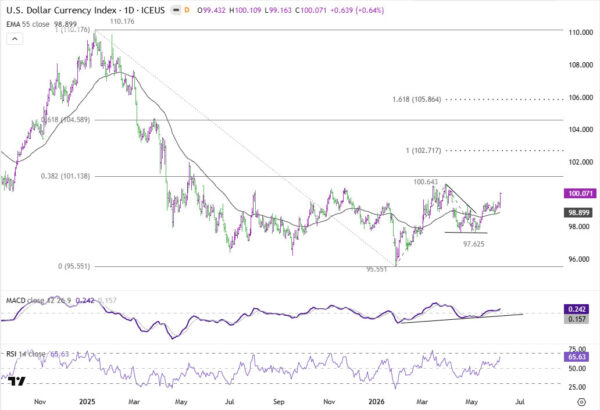
Global financial markets ended the week on a cautious note as investors confronted a trio of challenges impacting the forex market and broader asset classes. After a strong May fueled by enthusiasm for artificial intelligence (AI), steady economic growth, and hopes for easing geopolitical tensions, recent developments have cast a shadow over market optimism. The combination of a sharp decline in technology stocks, renewed expectations that US interest rates may remain elevated for an extended period, and escalating conflict in the Middle East has driven risk aversion among traders.
The initial trigger was a setback in the AI trade, highlighted by semiconductor giant Broadcom’s unexpected revenue miss. This earnings disappointment sparked widespread profit-taking across semiconductor and AI-related shares, which had previously been priced for exceptional growth. Broadcom’s role as a key supplier to major tech firms underscored concerns about the sustainability of rapid AI-driven expansion. Following this, other major semiconductor companies such as Micron and Arm Holdings also experienced notable declines as investors reassessed valuations amid heightened execution risks.
Simultaneously, the US labor market report revealed stronger-than-expected job growth, with payrolls rising significantly in May. While this reinforced confidence in the economy’s resilience, it also diminished prospects for near-term Federal Reserve rate cuts. The steady unemployment rate and stable labor-force participation suggest that the Fed can afford to be patient but must remain vigilant about inflationary pressures, especially those linked to elevated energy costs. Treasury yields reacted accordingly, climbing above 4.5%, which further supports a stronger US dollar.
Geopolitical tensions in the Middle East added another layer of uncertainty. Initial hopes for a US-Iran agreement or ceasefire extension have faded as military actions intensified near the Strait of Hormuz. Recent US strikes on Iranian radar facilities followed drone attacks targeting vital shipping lanes, prompting retaliatory missile launches against US bases in Bahrain and Kuwait. These developments threaten disruption to one of the world’s most crucial oil transit routes, raising concerns about energy supply security and inflation.
In currency markets, the US dollar emerged as the clear beneficiary of these combined factors. Its rally was supported by rising Treasury yields and safe-haven demand amid geopolitical risks. The Japanese yen also gained ground due to heightened uncertainty, while commodity-linked currencies like the Australian and New Zealand dollars weakened alongside falling risk appetite and rising oil prices. The euro and Canadian dollar remained relatively stable but showed sensitivity to ongoing macroeconomic shifts.
Oil prices hold significant implications for future market sentiment. Brent crude has hovered below key resistance levels but could face upward pressure if Middle East tensions continue or escalate further. A sustained rise above certain technical thresholds may signal renewed pricing of supply disruptions, potentially amplifying inflation concerns worldwide and complicating central bank policy decisions.
Looking ahead, forex traders are closely watching how these intertwined risks evolve. The interplay between economic data, central bank actions, technology sector performance, and geopolitical events will likely dictate currency movements in coming weeks. Market participants may adopt more cautious positioning as uncertainties persist across multiple fronts, emphasizing the importance of vigilance in navigating this complex environment.