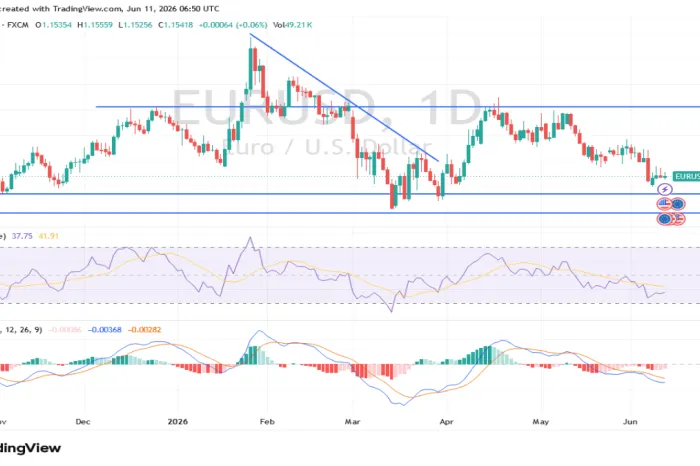
The EUR/USD exchange rate is experiencing downward pressure as investors closely monitor the European Central Bank’s (ECB) recent interest rate increase and the growing economic disparities between the eurozone and the United States. The ECB raised its benchmark rate by 25 basis points to 2.25%, aiming to rein in persistent inflation that remains stubbornly above its 2% target. Despite this monetary tightening, the euro has struggled to strengthen against the US dollar.
ECB’s Tightening Efforts Amid Inflation Concerns
The ECB finds itself in a difficult position, attempting to tighten monetary policy enough to curb inflation without pushing the eurozone economy into recession. Analysts warn that any miscalculation could either trigger an economic slowdown or allow inflation to remain entrenched—both outcomes unfavorable for the euro’s value. While further rate hikes are anticipated, these moves may not be sufficient to support a sustained euro rally.
Market Outlook and Growth Divergence
Financial institutions like Bank of America have adopted a cautious stance on EUR/USD, highlighting the risks of further declines. They point out that markets may be underestimating the widening gap between US and eurozone economic growth and monetary policies. Although hopes for peace in the Middle East have temporarily eased pressures on energy markets, risks of rising energy prices persist, which could weigh on eurozone trade balances and add downward pressure on the euro.
Technical Indicators Signal Bearish Momentum
From a technical perspective, EUR/USD has broken key support levels around 1.15 and failed to maintain rebounds above resistance near 1.16. Momentum indicators such as the Relative Strength Index (RSI) and Moving Average Convergence Divergence (MACD) suggest ongoing negative momentum, with potential further declines toward lows near 1.14 or below.
Mixed US Data and Safe-Haven Demand
US economic data presents a mixed picture. Inflation shows signs of easing, with slower core Consumer Price Index growth reducing expectations for aggressive Federal Reserve rate hikes this year. However, geopolitical tensions in the Middle East and rising energy costs continue to bolster the US dollar’s appeal as a safe-haven currency.
Looking Ahead: Key Data and ECB Communications
Market participants are now focused on upcoming US Producer Price Index figures and forthcoming statements from ECB President Christine Lagarde. Investors will be watching closely for updated economic forecasts and guidance on future rate moves. Should the ECB signal continued tightening despite growth concerns, the euro may see brief gains; otherwise, downward pressure on EUR/USD is likely to persist.
In conclusion, although the ECB is moving forward with its rate-hiking cycle amid inflation challenges, underlying economic headwinds and global uncertainties continue to weigh heavily on EUR/USD. Market sentiment currently favors fading rallies and preparing for further declines as diverging fundamentals between the US and eurozone shape exchange rate trends.