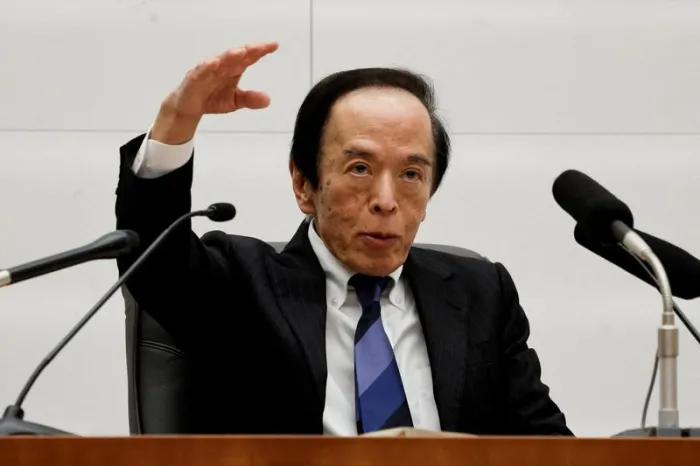
Bank of Japan Governor Kazuo Ueda has been hospitalized for medical treatment and will not attend the central bank’s policy meeting scheduled for June 15 to 16, the BOJ announced on June 10. This marks the first time since the current policy decision system began in 1998 that the governor has missed a scheduled meeting. Despite his absence, the bank is widely expected to raise interest rates to levels not seen in three decades in response to rising inflation pressures, partly driven by geopolitical tensions such as the Iran conflict.
Governor Ueda, aged 74, is undergoing treatment for an infected liver cyst and is expected to remain hospitalized for about two weeks. During this period, he will work remotely and submit a written statement expressing his views on monetary policy but will not participate in the vote on rate decisions. The BOJ expects him to return for the following policy meeting at the end of July.
Deputy Governor Ryozo Himino will lead the rate review in Ueda’s place, while Deputy Governor Shinichi Uchida will handle the post-meeting press conference. Uchida recently recovered from leukemia treatment and was discharged from hospital in late May. Market participants are closely watching these developments as they could affect the bank’s communication strategy regarding future monetary policy moves.
The BOJ is at a critical juncture as it transitions from years of massive stimulus to combating inflation that has risen above its 2% target due to higher commodity prices and labor shortages. Since assuming office in 2023, Ueda has been gradually removing stimulus measures. His recent hawkish remarks have signaled a shift toward more aggressive rate hikes, which many analysts expect to begin with next week’s meeting.
However, political dynamics may complicate the central bank’s path forward. Prime Minister Sanae Takaichi, known for favoring looser fiscal and monetary policies, has expressed concerns about raising rates. Some analysts suggest that Ueda’s health issues might provide an opportunity for political influence over BOJ policy or leadership changes if he were to step down prematurely. Still, economists currently view a sudden leadership change as unlikely.
The yen remained stable against the dollar following the announcement, trading near 160.5 yen per dollar—a level that has previously triggered official intervention by Japanese authorities. The upcoming rate decision is expected to have significant implications for Japan’s economic direction and currency markets amid ongoing global uncertainties.
In summary, while Governor Ueda’s hospitalization introduces uncertainty into the Bank of Japan’s policy discussions, the institution appears poised to proceed with a historic interest rate increase next week. The leadership adjustments and external political factors will be closely monitored as Japan navigates this important phase in its monetary policy.