The Bank of Japan (BOJ) has recently highlighted a shift in Japan’s labor market, suggesting that companies are now competing more intensely for workers, a change expected to lead to moderate wage increases and improved economic efficiency. However, closer examination of employment trends and productivity data reveals a more complex picture that challenges the BOJ’s optimistic view.
BOJ Governor Kazuo Ueda stated that the traditional lifetime employment system, which limited job changes and wage competition, is evolving. He pointed to data indicating a decline in workers employed by lower-productivity firms and an increase in those working for higher-productivity companies. This trend, he argued, could reflect firms bidding up wages to attract talent, fostering labor reallocation toward more productive sectors.
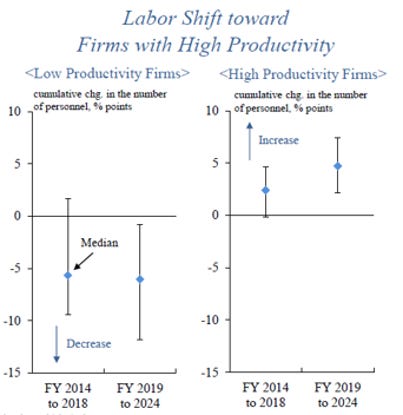
Despite these claims, economists caution that the data referenced by Ueda covers only about half of Japan’s workforce—those employed by roughly 900,000 incorporated companies. This group tends to have higher wages and productivity levels compared to workers in unincorporated firms, whose numbers have been growing. In fact, the share of employees working for small unincorporated businesses, which generally have lower productivity and pay, has risen significantly since 2008.
Further complicating the narrative is evidence that the overall share of corporate employees within Japan’s total labor force has shrunk from 70% in 2008 to just 58%. Meanwhile, employment in micro and small firms with low productivity has expanded. This shift suggests that rather than a broad competition among firms driving wage growth, structural changes in company sizes and types are influencing employment patterns.
Additionally, the supposed competition for workers does not appear to have substantially increased wages across the board. While some of the largest and most profitable companies have managed modest real wage gains between 2022 and 2026, many medium-sized and small firms have seen either stagnant or declining real wages. The labor share of value added has generally declined across all company sizes, indicating limited upward pressure on wages from competition.
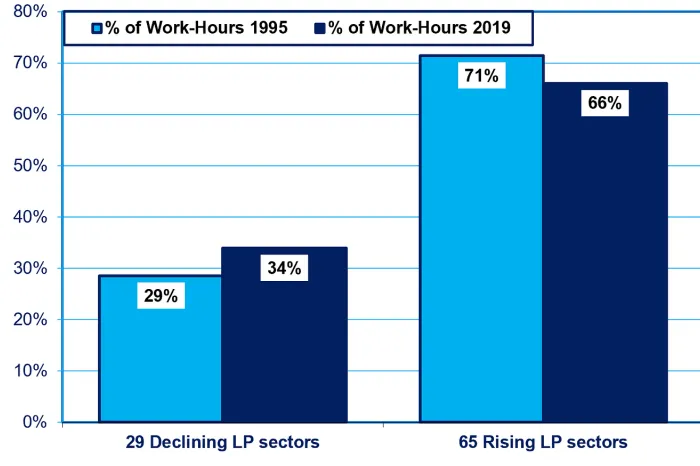
The broader context also highlights persistent issues in Japan’s labor market. A significant portion of the economy remains stuck in low-productivity sectors where output per hour has declined over decades. Instead of labor moving toward more dynamic industries, there has been a rise in work hours within stagnant sectors. This bifurcation means that while younger, highly skilled workers may benefit from increased mobility and wage hikes, many middle-aged workers face downward mobility.
This dual economy poses challenges for policymakers aiming to stimulate sustained wage growth and inflation through labor market dynamics. Critics argue that the BOJ may be influenced by confirmation bias, interpreting selective data as evidence of progress toward their inflation targets despite ongoing structural problems.
In summary, while there are signs of some labor mobility improvements and pockets of wage growth among top performers, the overall Japanese labor market continues to grapple with low productivity sectors and uneven wage trends. The BOJ’s optimistic assessment of companies competing for workers does not fully capture these complexities or guarantee broad-based wage increases necessary for robust economic growth.