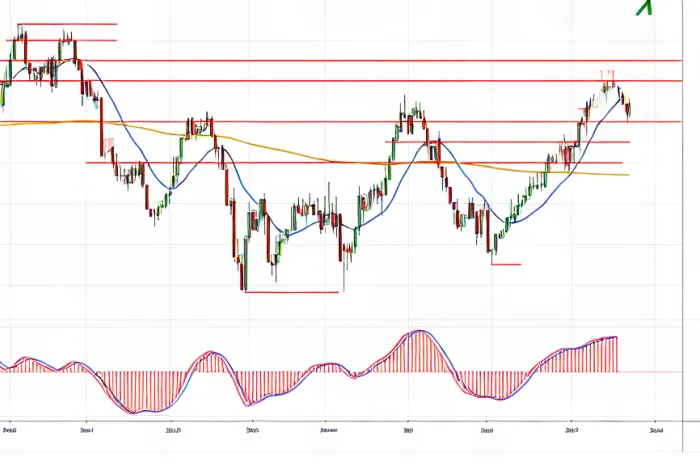
The Canadian dollar fell to its weakest point in seven months against the US dollar as investors took a cautious stance ahead of a crucial Federal Reserve interest rate announcement. On Wednesday, the USD/CAD exchange rate climbed to an intraday high of 1.4036, marking its highest level since November. By mid-afternoon, the loonie had eased back by 0.3%, trading at 1.4030 per US dollar, or approximately 71.28 US cents. This decline aligns with a broader trend where the Canadian dollar has also weakened against other major currencies such as the euro, British pound, and Japanese yen.
Market Dynamics and Fed Speculation
Market analysts point to short-covering activities as a key driver behind the recent strength of the US dollar. With the Federal Open Market Committee (FOMC) embarking on a two-day policy meeting, investors are eagerly searching for signals about a potentially more aggressive interest rate approach under new Fed chair Kevin Warsh. The uncertainty surrounding future US monetary policy has prompted many market participants to reduce their risk exposure, bolstering demand for the US dollar.
Impact of Oil Price Fluctuations
Adding downward pressure on the Canadian dollar is the notable drop in crude oil prices, a vital export commodity that significantly influences Canada’s trade balance and economic outlook. Despite a slight rebound of 0.7% to $76.67 per barrel following comments from US President Donald Trump hinting at renewed tensions with Iran, oil prices have declined nearly 10% since the start of the week. This slump in energy prices has weighed heavily on the loonie’s value.
Economic Data and Technical Outlook
Looking ahead, investors are closely monitoring upcoming Canadian retail sales data for April, expected on Friday. Economists forecast a moderate rise of 0.6% compared to March, which could provide further insight into domestic economic resilience and influence currency movements.
Technically, early cautious trading shifted to gains driven by Canadian dollar demand, pushing USD/CAD above 1.4025—surpassing the weekly high recorded on June 11. Momentum indicators hint at potential further advances toward 1.4050; however, overbought conditions and resistance near 1.4100 may limit immediate gains.
Support has strengthened around the 1.4000 mark; a break below this level might stabilize prices and lead to consolidation above recent lows near 1.3930. Meanwhile, Canadian government bond yields showed mixed signals with a slightly flatter yield curve as the benchmark 10-year yield fell by 1.9 basis points to 3.372%.
Outlook Amid Global Uncertainty
Overall, the Canadian dollar’s path remains closely tied to developments in US monetary policy and fluctuations in global oil markets. Traders continue to keep a watchful eye on these key factors as global economic uncertainties persist.