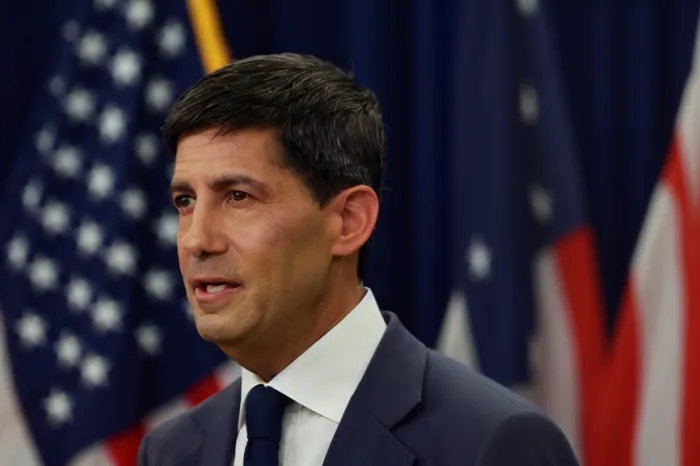
The Federal Reserve decided to keep interest rates unchanged at a target range of 3.5% to 3.75% during its latest meeting, marking the first policy decision under new Chairman Kevin Warsh. While the central bank held steady for now, officials indicated a growing likelihood of rate increases later this year due to persistent inflation pressures.
Chairman Warsh’s debut at the Fed came amid a complex economic backdrop, including elevated inflation reaching its highest point in three years and ongoing geopolitical tensions from the conflict involving Iran. Although a tentative peace agreement between the United States and Iran has raised hopes for easing energy prices, inflation remains significantly above the Fed’s 2% target, driven largely by higher fuel and food costs.
In a notable shift, the Fed’s post-meeting statement was drastically shortened compared to previous releases. Warsh removed detailed forward guidance about future rate changes, signaling a move away from the traditional practice of providing clear projections. Instead, the statement focused on delivering factual updates and emphasized the Fed’s commitment to achieving price stability.
The committee’s economic projections revealed a split among policymakers. Nine members now expect one or more rate hikes before the end of 2026, reflecting concerns that inflation risks have increased. This contrasts with earlier forecasts that anticipated rate cuts during the year. Warsh himself did not submit a personal projection or “dot plot,” underscoring his belief that too much forward guidance can restrict the Fed’s flexibility.
During his first press conference as chair, Warsh stressed that price stability would be the Fed’s top priority. He also expressed optimism that the economy could continue growing without forcing a difficult trade-off between controlling inflation and supporting employment. However, he avoided specifying under what conditions rates might rise, instead announcing five new task forces aimed at improving how the Fed communicates, manages its balance sheet, analyzes data, and understands inflation trends.
Market reactions to the meeting were swift. Stocks declined sharply following the announcement, while bond yields rose as investors digested the possibility of higher interest rates in the months ahead. The dollar strengthened amid concerns about persistent inflation and tighter monetary policy.
Warsh’s leadership marks a departure from his predecessor Jerome Powell’s approach, especially regarding transparency and communication. By cutting back on forward guidance, Warsh aims to prevent markets from overreacting to every policy signal and maintain greater flexibility to respond to changing economic conditions.
Looking ahead, investors and economists will closely monitor upcoming inflation data and Warsh’s implementation of his reform agenda. The new chairman faces the challenge of balancing inflation control with economic growth in an environment complicated by external shocks and political pressures. For now, the Fed remains cautious but prepared to act if inflation does not ease.