The European Central Bank (ECB) has marked five years since launching its Survey of Monetary Analysts (SMA), a critical tool for understanding financial market expectations about monetary policy and the euro area economy. Initiated as a pilot in April 2019 and fully operational by June 2021, the SMA collects views from a carefully selected panel of financial institutions before each Governing Council monetary policy meeting. Over this period, it has become essential for tracking how market participants interpret economic trends, inflation, and policy decisions.
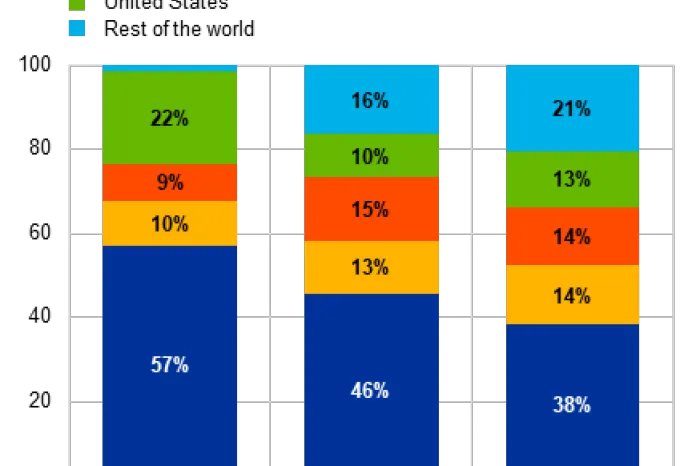
The SMA panel has grown substantially, from 30 participants in 2021 to 75 in 2026. This expansion has improved the survey’s accuracy and representativeness by including a broader range of financial institutions. While banks still make up just over half the panel, nearly half now come from non-bank sectors such as asset managers, insurance companies, pension funds, and hedge funds. This diverse mix better reflects the institutions involved in the transmission of ECB policies.
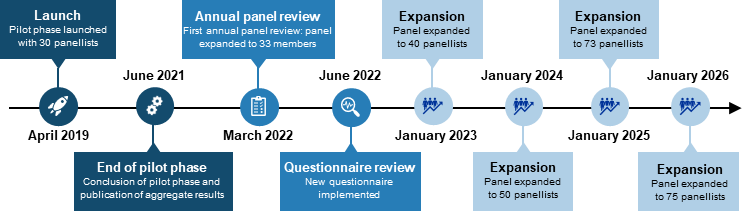
The survey’s questionnaire has also been refined to ensure clarity and consistency, with a major revision in June 2022 simplifying questions and reducing respondent burden. Unlike private polls conducted by external providers, the ECB’s SMA is uniquely designed from a monetary policy perspective, enabling a comprehensive and standardized view across key economic variables, policy rates, and balance sheet expectations.
Insights from the SMA have proven valuable for ECB decision-making. The survey captures median forecasts and the distribution of expectations regarding interest rates, inflation, and GDP growth. For example, in late 2025, while median interest rate forecasts remained stable, disagreement among analysts dropped sharply, signaling increased consensus on monetary policy outlook. However, detailed analysis revealed that different groups of respondents held distinct views on inflation and growth prospects, highlighting the heterogeneity within market expectations.
Comparisons with standard monetary policy frameworks like Taylor rules show that SMA expectations generally align with macroeconomic fundamentals but can vary when risks or shocks influence market sentiment. During periods of uncertainty or high volatility, expectation formation becomes more complex as analysts incorporate risk assessments and potential deviations from typical policy responses.
Forecast accuracy is another strength of the SMA. While early inflation forecasts during the pandemic-related shocks showed notable errors across all forecasters, including ECB staff projections, accuracy improved significantly as economic conditions stabilized. The SMA often matched or outperformed institutional forecasts during this normalization phase. For GDP growth predictions, forecasting remains challenging due to economic turning points but provides useful information when combined with measures of disagreement and risk perceptions.
The survey also offers insights into perceived risks affecting the euro area economy. In late 2025, fiscal policy changes in Germany were seen as positive demand-side factors boosting growth and inflation prospects. Conversely, trade tensions and geopolitical uncertainties were viewed as downside risks primarily dampening growth. Understanding whether risks originate from demand or supply shocks helps guide appropriate monetary policy responses.
Overall, after five years of operation, the ECB’s Survey of Monetary Analysts has become a vital instrument for monitoring market expectations and supporting policy decisions. Its structured approach to capturing diverse financial sector views enhances the ECB’s ability to analyze how news and communications influence economic outlooks. The SMA complements other data sources by providing detailed insight into expectation formation processes that shape monetary policy transmission in the euro area.