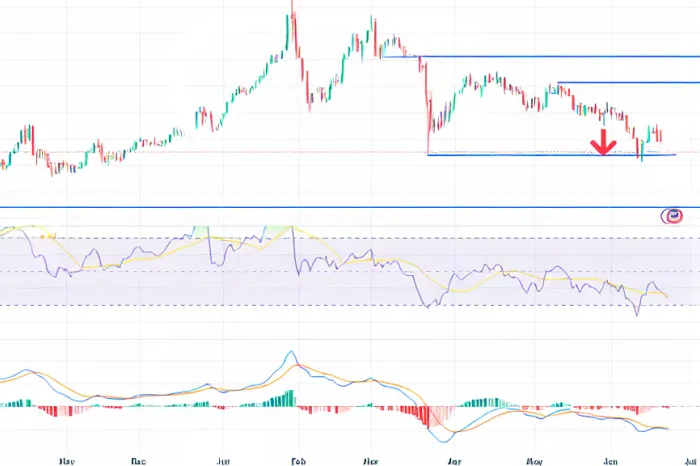
The forex market is experiencing notable volatility as key commodities and currency pairs react to shifting central bank policies and emerging economic indicators. Gold prices have faced persistent downward pressure, primarily driven by expectations of a more hawkish US monetary policy and a robust US dollar. This combination has pushed gold to its lowest level in three months, testing critical support areas amid sustained bearish momentum.
Technical analysis shows that gold is struggling to hold above the $4,100 per ounce mark, encountering resistance at $4,190, $4,275, and $4,330 levels. Traders remain vigilant for any signs of a price reversal; however, the prevailing trend currently favors sellers. The Relative Strength Index (RSI) nears oversold territory, while moving averages and the MACD indicator confirm ongoing selling pressure in the short term.
Simultaneously, the Reserve Bank of India (RBI) has implemented new measures aimed at enhancing foreign currency inflows. Indian banks are now authorized to extend loans against foreign-currency deposits accumulated through the RBI’s special overseas funds program. This policy enables banks to place liens on such deposits and issue letters of credit backed by them. The move is expected to encourage greater participation from financial institutions and strengthen dollar inflows into India’s markets.
Meanwhile, the EUR/USD currency pair remains sensitive to the strength of the US dollar amid speculation surrounding future Federal Reserve interest rate adjustments. Analysts caution that while historical price trends provide some insights, they do not guarantee specific outcomes. The dominant market sentiment indicates that the US dollar may continue to exert influence as investors carefully evaluate global economic data and central bank communications.
Given these complex factors, forex traders are advised to apply prudent risk management strategies. Gold investors should closely monitor whether selling pressure continues or if buyers can regain control at key resistance points. Similarly, currency traders must stay alert to central bank announcements and macroeconomic releases to navigate potential market fluctuations effectively.
Overall, the forex market remains shaped by an intricate interplay of US monetary policy outlooks, commodity price movements, and international capital flows. Staying well-informed on both technical indicators and fundamental developments is essential for market participants aiming to optimize their trading strategies in a constantly evolving global financial environment.