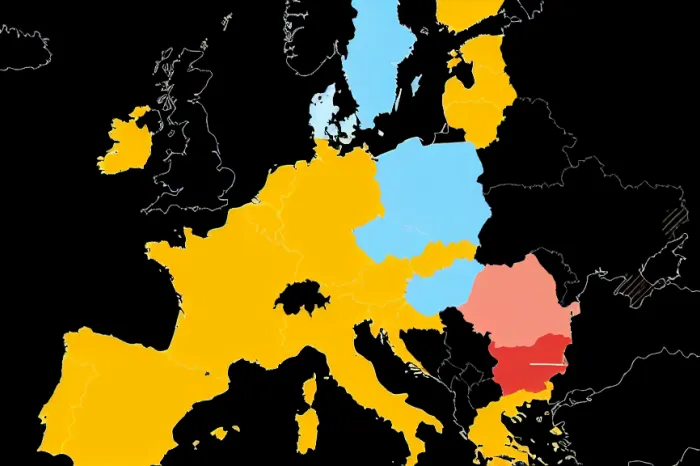
The European Central Bank (ECB) has released a comprehensive report revealing that many European Union countries outside the eurozone are struggling to meet the economic requirements necessary for adopting the euro. Despite binding commitments for all EU members—except Denmark—to eventually join the currency union, progress remains slow and uneven across the continent.
ECB’s Assessment of Euro Adoption Progress
In its latest biennial report published on June 24, 2026, the ECB points to stagnation in the efforts of non-euro EU countries to align with the Maastricht criteria. The report identifies worsening public finances and external economic shocks as key factors undermining convergence. Several countries have seen their debt-to-GDP ratios increase since the previous assessment in 2024, making it harder for them to fulfill the stringent fiscal and monetary standards required for euro adoption.
Hungary stands out as one of the most actively discussed candidates for eurozone entry but currently fails to meet any of the critical Maastricht benchmarks. The country grapples with high government debt, rising interest rates, ongoing budget deficits, inflation beyond acceptable limits, and volatile currency conditions. Additionally, the ECB has criticized Hungary’s central bank law for not adhering to established standards and raised concerns about governance, rule of law, and corruption issues.
Institutional and Economic Hurdles
The report emphasizes that strengthening public institutions and ensuring their independence from political interference are essential steps toward sustainable economic growth driven by the private sector. Structural challenges such as demographic decline and labor market skill mismatches further complicate Hungary’s—and other countries’—ability to meet eurozone accession criteria.
While Bulgaria successfully joined the eurozone at the start of 2026, other hopefuls including the Czech Republic, Poland, Romania, and Sweden remain far from ready. Many EU members outside the euro area prefer to maintain control over their monetary policies rather than hastily adopt the euro without full preparedness.
Implications for EU Economic Integration
The ECB’s findings reveal a cautious approach among non-eurozone members toward deeper integration. Although EU law mandates eventual adoption of the common currency by all members except Denmark, enforcement remains weak. This allows countries to delay joining indefinitely if they lack readiness or political will.
In summary, despite formal commitments and political promises, significant economic and institutional barriers continue to slow euro adoption across much of the EU. The ECB calls for persistent reforms and stronger governance frameworks to facilitate future enlargement of the currency union and foster closer economic integration within Europe.