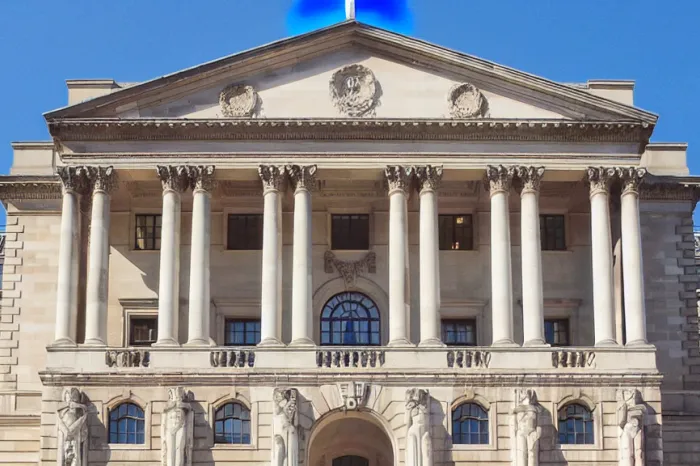
The Bank of England (BoE) has taken a significant step forward in shaping the United Kingdom’s digital financial landscape by unveiling updated regulatory policies for systemic stablecoin issuers. These measures aim to integrate sterling-denominated stablecoins into the mainstream payments system while balancing innovation, safety, and commercial viability. The new policy statement and draft Code of Practice reflect extensive consultation feedback from industry players, including fintech firms, payment service providers, and institutional investors.
One of the most notable changes in the BoE’s approach is the removal of previous individual holding limits on stablecoins. Originally, the bank proposed caps of £20,000 for individual accounts and £10 million for businesses, which drew criticism for potentially hindering transaction speed and scalability. Instead, the BoE has introduced a temporary issuance cap set at £40 billion per systemic stablecoin product. This macro-level guardrail is designed to be reviewed regularly and could be removed once risks to financial stability are deemed manageable.
In terms of reserve asset composition, the BoE has adjusted requirements to enhance yield potential for issuers without compromising security. The new rules allow up to 70% of reserves to be held in short-term UK government gilts, with the remaining 30% in central bank deposits. This adjustment from a previous 60/40 split enables issuers to earn more on their reserve assets while maintaining liquidity needed for redemption demands. Additionally, firms recognized as systemic at launch may temporarily hold up to 95% of their reserves in gilts to support early operational scaling.
The Bank of England has also emphasized strong consumer protections as a cornerstone of its framework. Issuers must honor redemption requests at face value within 24 hours without excessive fees or restrictions, even during market stress. To further safeguard users, the policy mandates two separate statutory trusts: one to protect coinholders’ interests and another to cover administrative costs related to insolvency proceedings. Moreover, an emergency liquidity facility will allow solvent issuers to pledge gilt holdings to the central bank for emergency funding, reducing risks linked to forced asset sales.
Beyond stablecoin regulation, the BoE is actively involved in developing next-generation payments infrastructure that supports AI-driven agent transactions at scale. At the Point Zero Forum in Zurich, Tom Mutton from the BoE highlighted the importance of an open system that avoids fragmentation and supports small businesses through public-private partnerships. HSBC and Stripe are among contributors working on this infrastructure that balances standardization with innovation.
HSBC’s Shayan Hazir shared insights on challenges faced during a B2B pilot with Mastercard in Singapore involving stablecoins and agent mandates. He stressed that authenticating agents alone is insufficient; understanding their mandate is crucial for trust and safety in autonomous systems. Drawing parallels with aviation’s journey toward safe autonomy, Hazir advocated building robust safety frameworks before granting autonomous powers to agents.
The BoE’s dual-regulator model positions it alongside the Financial Conduct Authority (FCA), which oversees non-systemic retail stablecoins, creating a unified regulatory lane for systemic stablecoins under the central bank’s purview. As consultations continue until September 22, 2026, market participants eagerly await final rules expected by year-end that will pave the way for fully regulated sterling stablecoins in 2027.
While the framework offers legal clarity and improved business viability compared to earlier proposals, questions remain about whether stringent issuance caps and reserve requirements may limit commercial adoption compared to US dollar-denominated alternatives. The coming months will be critical in determining whether the UK’s approach successfully fosters a dynamic and secure digital payments ecosystem.