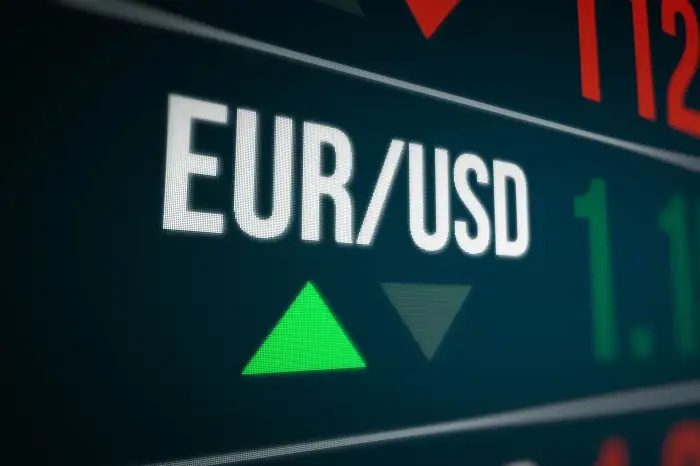
The EUR/USD currency pair has resumed its decline in early trading, weighed down by a robust US dollar and ongoing economic uncertainty. Analysts highlight that any short-lived gains in the euro are likely to meet resistance near the 1.14 level, a key threshold identified from recent price movements. If the euro continues to weaken, the focus will shift toward the 1.12 support zone, which may come under scrutiny in the coming weeks if current market conditions persist.
Economic Divergence Drives EUR/USD Dynamics
The euro’s sustained weakness mirrors the contrasting economic and monetary policy paths between the Eurozone and the United States. The US dollar’s strength is largely supported by expectations of further interest rate hikes from the Federal Reserve, standing in sharp contrast to the European Central Bank’s cautious approach amid slower economic growth across Europe. This divergence in central bank policies remains a primary force influencing the EUR/USD exchange rate.
Meanwhile, the British pound has shown greater resilience compared to the euro. After an initial rebound attempt, GBP/USD has settled around 1.3150, a historically significant level for traders. Despite facing some downward pressure, the pound benefits from stronger fundamentals, including higher interest rates in the UK and a relatively healthier economy, which provide additional support. Market analysts suggest that if selling momentum persists, the pound could test levels near 1.30, though upward movements may encounter resistance close to 1.3250.
Global Currency Trends Reflect Broader Economic Influences
Elsewhere in foreign exchange markets, the US dollar has strengthened against the Norwegian krone, breaking through key resistance points. The USD/NOK pair is being closely monitored for potential advances toward or beyond the 10.00 mark. This movement is partly driven by fluctuations in crude oil prices, which significantly impact Norway’s energy-reliant economy. Traders also track technical indicators such as the 200-day exponential moving average at 9.71 to gauge momentum and possible trend reversals.
Overall, these currency trends underscore how expectations regarding monetary policy and economic performance continue to shape global foreign exchange markets. The US dollar’s persistent strength reflects investor confidence in the Federal Reserve’s tightening measures, while currencies like the euro face downward pressure due to slower growth prospects and cautious central bank guidance.
With volatility remaining elevated, market participants are advised to monitor critical support and resistance levels across major currency pairs carefully. The evolving global policy landscape will remain a key driver of currency valuations in upcoming weeks, with economic data releases and central bank statements playing crucial roles in shaping investor sentiment.