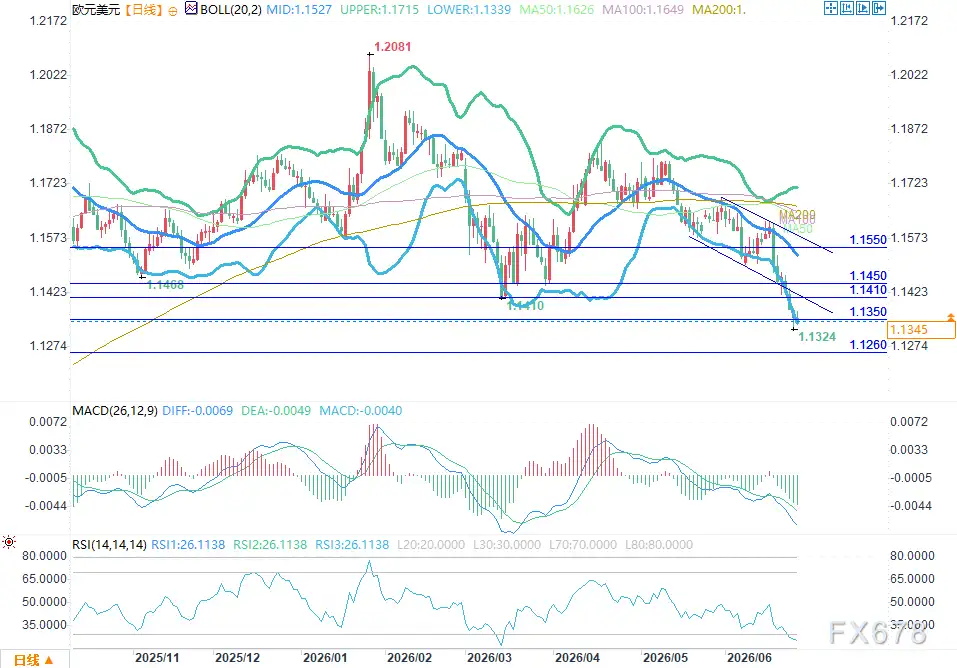
The EUR/USD currency pair has continued its downward trend, reaching a fresh one-year low near 1.1350 during the European trading session on June 25. This marks a significant year-to-date drop of approximately 6% for the euro against the US dollar. The primary factor behind this decline is the robust rebound of the US dollar, with the Dollar Index rising to 101.2, its highest level in over a year. Market sentiment is heavily influenced by growing expectations that the Federal Reserve will implement further interest rate hikes, driving global capital flows toward dollar-denominated assets and placing pressure on most other currencies, including the euro.
Despite the European Central Bank’s recent rate increase two weeks ago, which would normally support the euro, the strength of the dollar has more than offset this effect. This divergence highlights a widening gap in monetary policy between the US and Europe. While the Fed signals additional tightening, ECB rate hike prospects have diminished amid tempered market expectations and cautious comments from ECB officials. This interest rate differential continues to weigh heavily on the euro’s value.
Adding to these challenges are falling global crude oil prices, with Brent crude dipping to $73 per barrel and West Texas Intermediate falling below $70. These declines stem from improved supply conditions due to ongoing US-Iran negotiations and increased shipping capacity through critical routes like the Strait of Hormuz, alongside weakening global demand. The differing energy profiles of the US and Europe further complicate currency movements: as a net energy exporter, the US benefits from higher oil prices supporting its currency; conversely, lower oil prices ease inflation in Europe but reduce ECB’s incentive for further tightening, weakening support for the euro.
Economic data from the eurozone offers little relief. Recent PMI readings indicate sluggish recovery momentum, although Germany’s IFO Business Climate Index showed a modest improvement by exceeding expectations. Nevertheless, this single positive indicator is insufficient to change the bearish outlook on the eurozone economy. Meanwhile, volatility in EUR/JPY caused by extreme yen market positioning and potential interventions has indirectly pressured EUR/USD downward. Market observers note that coordinated currency interventions by multiple countries could potentially limit USD/JPY gains and offer short-term support for EUR/USD.
Market sentiment related to artificial intelligence developments has emerged as a key short-term factor affecting EUR/USD fluctuations. Stability in equity markets tends to reduce volatility in the currency pair, while shifts in risk appetite influence investor positioning between euros and dollars. Analysts at ING Groep suggest that EUR/USD has entered a phase of short-term consolidation after months of decline. They highlight that if equity markets remain stable, EUR/USD might see a modest rebound toward 1.1400. ABN AMRO analysts also point out that although falling energy prices theoretically favor a euro rebound by reducing US energy export advantages, this effect is currently muted due to dollar-driven oil price declines.
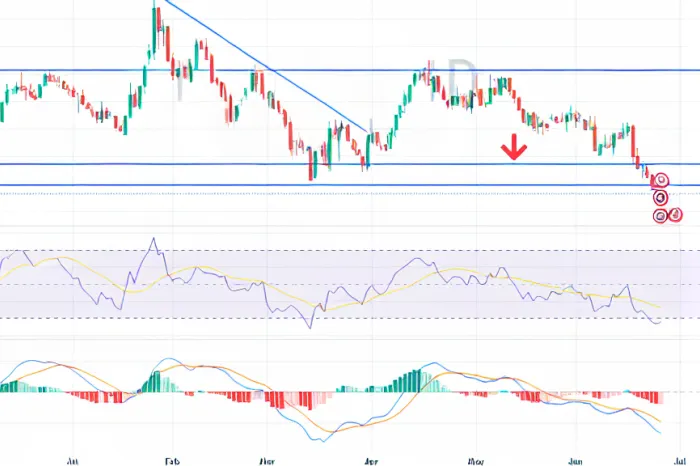
Technically, EUR/USD remains firmly bearish. The pair has broken below key support levels such as 1.1408 and trades beneath its downtrend channel’s lower boundary. Indicators like the Relative Strength Index (RSI) approach oversold territory while trading below Bollinger Bands suggests room for further downside movement. Immediate resistance levels are noted at 1.1450 and 1.1550, with support found near 1.1350 and stronger structural support around 1.1260 to 1.1250.
Looking ahead, traders are closely watching critical US economic releases including May’s Personal Consumption Expenditures (PCE) inflation data along with GDP and personal income figures. These reports will be pivotal in shaping expectations around Federal Reserve policy moves and could determine whether EUR/USD continues its decline or experiences temporary stabilization or rebound.