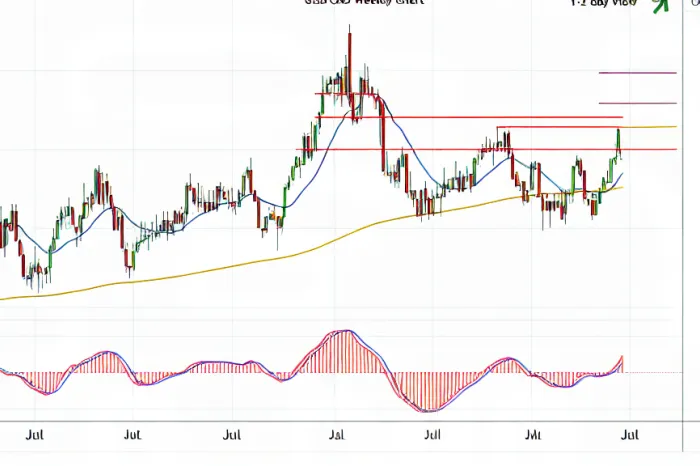
The USD/CAD currency pair remains close to its highest levels in several months, trading near the 1.4230 mark, just shy of the peak seen in April 2025. This steady position reflects investor caution as markets await the upcoming US Personal Consumption Expenditures (PCE) Price Index report, a key inflation indicator that could heavily influence the Federal Reserve’s future policy decisions.
Market dynamics affecting the USD/CAD are currently mixed. Expectations for further Federal Reserve interest rate hikes have softened amid signs of easing inflation pressures in the United States. This has slightly tempered recent gains in the US Dollar. Meanwhile, the Canadian Dollar faces downward pressure due to falling crude oil prices, which weigh on Canada’s economy given its reliance on commodities. The combination of a modestly weaker US Dollar alongside a declining Canadian Dollar has kept the USD/CAD exchange rate elevated near current levels.
From a technical analysis standpoint, USD/CAD recently broke through resistance levels established around November 2025 near 1.4130, signaling continued bullish momentum. The Moving Average Convergence Divergence (MACD) indicator remains positive, reinforcing this upward trend. However, the Relative Strength Index (RSI) is approaching an overbought level near 88, indicating that a short-term pullback or consolidation may occur before any further advances.
Traders should watch key support zones around 1.4200 and 1.4130 for potential buying opportunities if prices retreat. On the upside, breaking above the recent yearly high close to 1.4248 could renew bullish sentiment and push resistance targets toward 1.4350.
Despite the pair’s current strength, some analysts warn that the elevated USD/CAD level might be somewhat exaggerated due to ongoing economic uncertainties. The Canadian Dollar’s weakness appears intensified by falling oil prices and widening interest rate differentials between Canada and the United States.
Looking ahead, market focus remains firmly on forthcoming US inflation data releases that could reshape expectations for Federal Reserve policy and impact both currencies significantly. In this environment of cautious trading and mixed economic signals, USD/CAD is expected to experience volatility but maintain an overall upward bias unless major economic developments intervene.
In summary, while USD/CAD holds near multi-month highs supported by technical strength and softness in the Canadian Dollar linked to crude oil declines, traders should prepare for possible short-term corrections amid overbought conditions. Monitoring key support and resistance levels will be crucial in determining whether this upward trend continues or pauses before its next significant move.