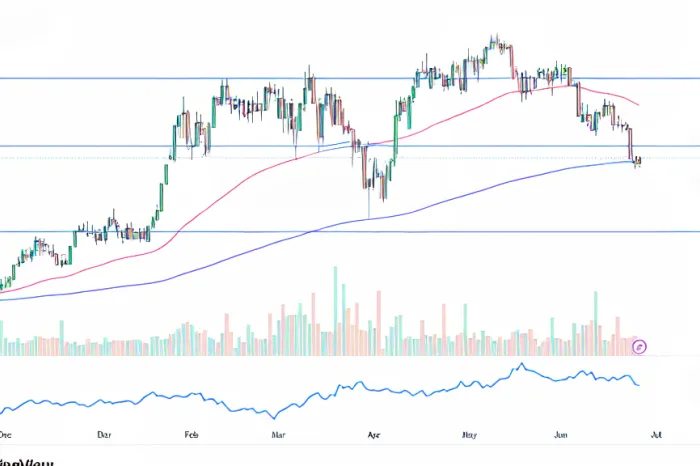
The Australian Dollar recently slipped below the 0.6900 level against the US Dollar, marking its lowest point since early April. This decline, exceeding 0.25%, was mainly driven by stronger-than-expected US economic data coupled with a rise in global risk aversion, which bolstered demand for the safe-haven US Dollar.
Impact of US Economic Data on AUD/USD
Recent economic indicators from the United States have strengthened expectations that the Federal Reserve will maintain its interest rate hikes. The final revision for first-quarter 2026 GDP growth came in at an annualized rate of 2.1%, notably higher than the initial estimate of 1.6%. Inflationary pressures remain evident, highlighted by persistent readings in the Personal Consumption Expenditures (PCE) Price Index. These figures keep the possibility of further tightening by the Fed firmly on the table for the remainder of the year.
Geopolitical Tensions and Market Reactions
Market sentiment took a hit following reports of an attack on a Singapore-flagged cargo ship by Iran’s Islamic Revolutionary Guard Corps near the Strait of Hormuz. This event has amplified concerns about the fragility of ongoing agreements between the US and Iran, contributing to a broader risk-off environment. In parallel, global equity markets experienced notable declines, especially within technology sectors, prompting investors to reduce exposure to higher-risk assets such as the Australian Dollar.
Reserve Bank of Australia’s Cautious Approach
Despite these pressures, expectations that the Reserve Bank of Australia (RBA) will continue its cautious but hawkish stance have helped limit more severe losses in AUD/USD. The RBA recently raised interest rates to 4.35% but indicated a potential pause to assess the impact of previous hikes. Market pricing currently suggests only a modest chance of additional rate increases later this year.
Technical Outlook and Market Sentiment
From a technical perspective, AUD/USD is hovering near critical support around its 200-day exponential moving average (EMA), a key level traders watch for trend direction. Resistance is identified near 0.6950, while support levels are found around 0.6835 and further down close to 0.6700 — a zone that once acted as strong resistance. Given these dynamics, traders are expected to adopt a cautious stance in the short term while awaiting new market catalysts.
Looking Ahead
Market focus will soon shift to upcoming data releases including the University of Michigan Consumer Sentiment survey and comments from Federal Reserve officials alongside RBA Governor Michele Bullock. These events could offer fresh insights into AUD/USD’s future direction amid ongoing global uncertainties.
In summary, while near-term downside risks remain elevated due to robust US economic performance and heightened risk aversion, future moves for AUD/USD will largely depend on central bank policies and evolving geopolitical developments. The pair continues to face downward pressure but may find opportunities for recovery if it holds key technical support levels.