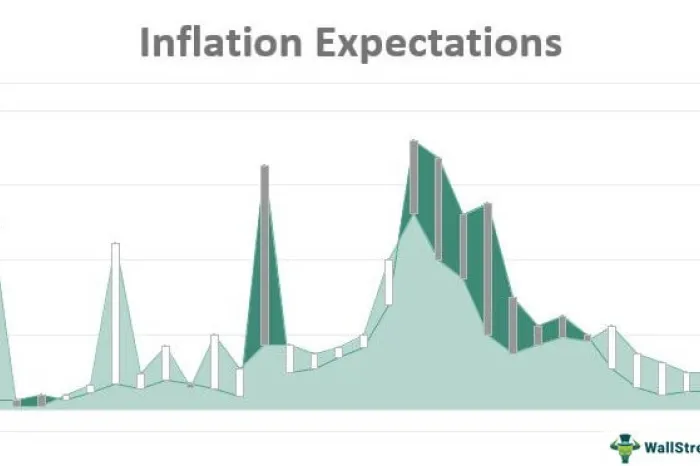
Inflation expectations play a vital role in shaping the Federal Reserve’s monetary policy. For many years, the Fed has treated these expectations as a key guide in managing actual inflation, blending economic data with careful judgment. Economists gather extensive information on what consumers, businesses, and financial markets anticipate regarding inflation trends. However, interpreting this data requires skill to understand which expectations truly influence spending and investing decisions.

The importance of inflation expectations is clear in Federal Open Market Committee (FOMC) communications. Since August 2009, every FOMC statement has mentioned inflation expectations, highlighting their central place in policy discussions. Prominent Fed officials, including Governor Christopher Waller and former Atlanta Fed President Raphael Bostic, have repeatedly emphasized the need to monitor and anchor these expectations to maintain price stability and support maximum employment.
Research supports the Fed’s focus on inflation expectations. Studies show that when long-term inflation expectations remain stable around 2 percent, it helps control actual inflation without harming the labor market. This stability was crucial during the post-pandemic inflation surge when the Fed successfully reduced inflation from over 7 percent in mid-2022 to near its 2 percent target by late 2024. Consumer behavior also reflects these expectations; for example, when households expect rising inflation, they may push for higher wages, which can lead businesses to raise prices in response.
The history of the 1970s and early 1980s demonstrates the dangers of unanchored inflation expectations. During that period, rising inflation led workers to demand pay increases to keep up with higher prices, causing companies to raise prices further and fueling a wage-price spiral. The Fed’s failure at that time to maintain tight monetary policy allowed expectations and inflation to spiral out of control. This historical lesson continues to inform the Fed’s commitment to anchoring expectations today.
Measuring and interpreting inflation expectations remains challenging. Different surveys and market-based indicators provide insights but come with limitations. For instance, changes in survey methods can affect responses, and some measures lack long-term historical data for comparison. Additionally, policymakers must consider both short-term fluctuations and long-term trends in expectations since economic shocks can temporarily raise inflation even if long-run views remain stable.
The Federal Reserve continues to develop tools like the Business Inflation Expectations survey introduced by the Atlanta Fed in 2011 and other Reserve Bank measures to better track these dynamics. Understanding how expectations influence consumer choices and business pricing is crucial for effective monetary policy. Ultimately, if people lose confidence in the Fed’s ability to keep inflation near its target, their rising expectations could make price stability harder to achieve.
In summary, inflation expectations are a cornerstone of the Federal Reserve’s strategy for maintaining economic stability. By carefully monitoring and managing these expectations, the Fed aims to fulfill its dual mandate of price stability and maximum employment amid changing economic conditions.