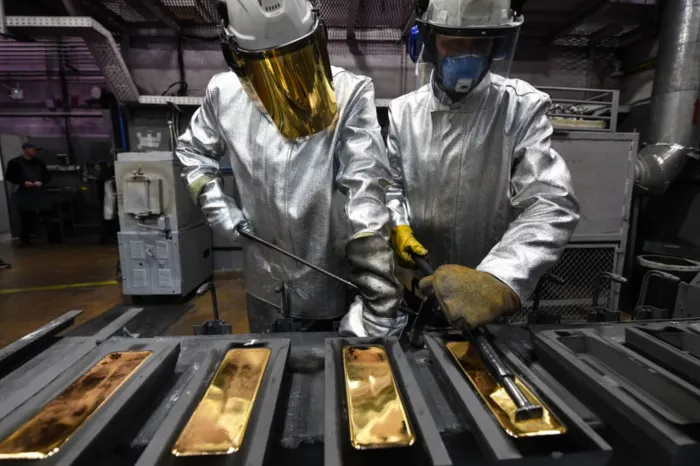
Gold prices experienced a sharp decline on Tuesday, marking their steepest quarterly drop in over ten years. The precious metal fell to $4,008.94 an ounce, hitting levels not seen since November earlier that day. This represents an 11.3% loss for June alone, pushing gold toward its first quarterly downturn since early 2024 and its largest retreat since mid-2013.
Fed’s Hawkish Stance Drives Gold Downward
The main catalyst behind this selloff is the U.S. Federal Reserve’s unwavering commitment to a hawkish monetary policy. With inflation rates stubbornly high, the Fed has signaled intentions to continue raising interest rates in an effort to tame rising prices. Higher interest rates tend to increase the attractiveness of assets that yield returns, such as bonds, making gold less appealing because it does not offer dividends or interest payments. Traditionally viewed as a hedge against inflation, gold is losing ground as monetary tightening gains momentum.
Geopolitical Tensions Add Complexity but Fail to Support Prices
Meanwhile, ongoing geopolitical tensions in the Middle East contribute to inflation concerns but have not been sufficient to stabilize gold prices amid the Fed’s aggressive policy stance. Edward Meir, an analyst at Marex, noted that fragile peace negotiations in the region are injecting uncertainty into the markets. Recent visits by senior U.S. officials to Doha have not yielded immediate progress in talks with Iran, casting doubt on any near-term resolution and adding volatility to gold’s prospects.
Market Eyes Key Economic Data and Rate Hike Expectations
Investors are closely watching upcoming U.S. economic indicators such as ADP employment figures and nonfarm payroll reports. These data points will play a critical role in shaping expectations for the Federal Reserve’s next decisions. According to CME FedWatch, there is roughly a 65% chance of another rate increase in September, reinforcing market anticipation of continued monetary tightening.
Other Precious Metals Follow Similar Trends
The downward pressure has also affected other precious metals. Silver slipped 0.8% to $58.26 an ounce, heading for its worst quarterly performance since early 2020. Platinum declined by 0.7% to $1,564.34 per ounce, while palladium edged up slightly by 0.2% to $1,215.94; both metals remain set for losses over the quarter.
Gold Remains a Strategic Hedge Despite Volatility
Despite recent price drops, gold continues to be regarded as an important diversification asset amid rising global uncertainty. A recent survey by OMFIF indicated that central banks plan to reduce their U.S. dollar reserves over the next decade due to escalating geopolitical risks, while increasing their holdings of gold in the near term.
In summary, the significant decline in gold prices reflects growing investor concerns over persistent inflation and an assertive Federal Reserve policy outlook. Coupled with geopolitical instability, these factors create a cautious yet intricate environment for precious metals markets going forward.