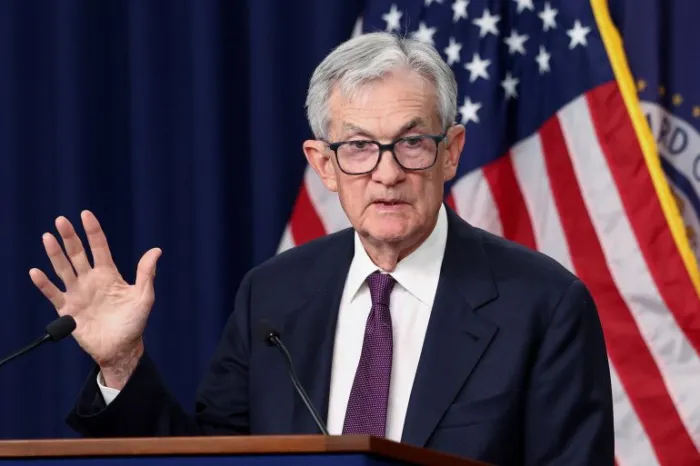
Neel Kashkari, president of the Federal Reserve Bank of Minneapolis and a voting member of the Federal Open Market Committee (FOMC), has revised his outlook for U.S. interest rates, now expecting a rate hike before the end of 2026. This marks a notable shift from his earlier forecast in March when he anticipated a rate cut by year-end. Kashkari announced this change during the Aspen Ideas Festival, citing broader inflation pressures beyond just energy prices as the key reason for his updated stance.
Kashkari highlighted that inflation is increasingly driven by supply chain disruptions, tariffs, and geopolitical tensions, particularly those affecting commodity markets like the Strait of Hormuz. He pointed to tariffs raising import costs, fertilizer shortages linked to Middle East conflicts, and rising energy prices as factors pushing inflation beyond previous estimates. This broader inflationary pressure contrasts with earlier views that centered mostly on volatile oil prices.
Data released shortly before Kashkari’s remarks supports his concerns. The Federal Reserve’s preferred inflation gauge, the personal consumption expenditures (PCE) index, showed core prices rising 0.3% in May and 3.4% over the past year—well above the Fed’s 2% target. This persistent inflation has lasted for five years, challenging the central bank’s efforts to stabilize prices.
Other Federal Reserve officials have expressed mixed views on future rate moves. New York Fed President John Williams indicated that current policy remains appropriate and expects inflation to ease, while Chicago Fed President Austan Goolsbee voiced continued concern about inflation but refrained from predicting rate changes. Meanwhile, financial institutions like Bank of America have adjusted their forecasts to include multiple rate hikes before year-end and no cuts until 2028.
The prospect of higher interest rates has implications beyond monetary policy. Mortgage rates, which have hovered around 6.5% for 30-year fixed loans, may stay elevated if inflation remains sticky. Economists warn that if energy-related costs start influencing broader transportation and goods prices, the Fed might need to maintain a “higher-for-longer” rate environment to manage inflation expectations.
Kashkari’s shift signals that policymakers are closely watching evolving economic data and remain prepared to act if inflation risks persist or intensify. While he acknowledged uncertainty remains—saying “it’s a pencil” subject to change based on incoming data—his updated forecast reflects growing caution about inflation’s staying power amid global supply challenges and geopolitical instability.
As investors and markets digest these signals, the debate continues over how aggressively the Fed will need to tighten monetary policy in the months ahead. For now, Kashkari’s stance highlights a more hawkish tone within the Fed, underscoring that combating inflation remains a top priority despite recent pauses in rate hikes.