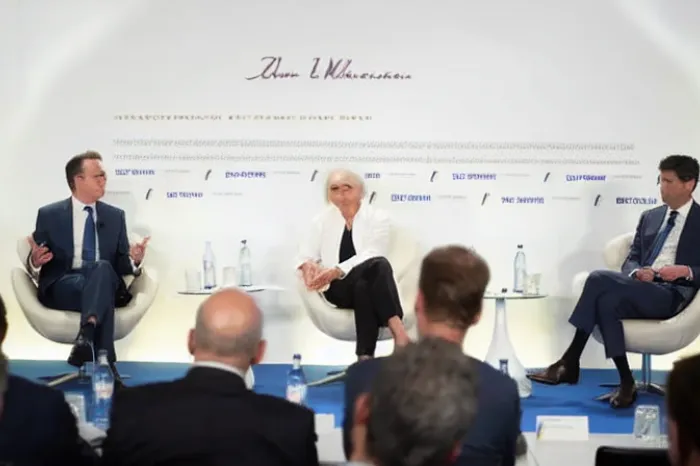
The European Central Bank (ECB) is signaling a more cautious approach to future interest rate increases as inflationary pressures within the eurozone show signs of easing. ECB President Christine Lagarde, speaking at the Central Bank Forum in Sintra, Portugal, emphasized a shift toward a balanced risk assessment compared to the more aggressive stance taken just weeks earlier. This moderation follows positive developments on both economic and geopolitical fronts.
Lagarde pointed out that the risk of uncontrolled inflation has diminished notably, especially after the recent diplomatic breakthrough between the United States and Iran to reopen the Strait of Hormuz. This agreement has contributed to a decline in oil and gas prices, returning them closer to pre-conflict levels despite lingering regional tensions. Such conditions have provided the ECB with greater flexibility, reducing the immediate need for sharp interest rate hikes.
Recent eurozone inflation data supports this outlook, with the inflation rate falling to 2.8% in June. This marks a reversal after four months of rising inflation, largely driven by lower energy costs easing overall price pressures. Lagarde stressed that central banks must remain alert and ready to adjust policies quickly as new economic indicators emerge. She also highlighted the potential role of advanced technologies like artificial intelligence in enhancing policy decision-making frameworks.
In addition, Lagarde introduced the concept of “framework guidance,” aimed at improving communication with investors about how the ECB assesses risks and economic data when determining policy moves. This approach is designed to better manage market expectations while preserving flexibility to respond to changing conditions.
Across the Atlantic, Federal Reserve Chairman Kevin Warsh expressed a similar cautious tone at the same forum. Warsh noted that inflation risks have lessened recently and indicated that future interest rate decisions would be made on a meeting-by-meeting basis without fixed forward guidance. This stance has tempered market expectations for further Fed hikes this year, with some analysts even anticipating possible rate cuts in 2027 as inflation stabilizes.
In an interview with Les Echos, Lagarde reaffirmed that last month’s ECB rate increase was appropriate given the data available at that time. She explained that although many Governing Council members were ready to act earlier in April, they chose to wait for clearer evidence before proceeding.
Taken together, these signals from major central banks reflect a more patient and measured approach amid improving inflation trends and increasing geopolitical stability. The ECB’s cautious stance underscores its commitment to maintaining price stability while supporting sustainable economic growth, all within an environment marked by global uncertainties.