The EUR/USD exchange rate has shown signs of recovery, trading near 1.1430 after bouncing back from recent multi-month lows. However, analysts remain cautious as underlying risks continue to tilt towards a downward trend. Citi analysts project the pair to test levels around 1.10 if US inflation remains persistent enough to keep markets anticipating further Federal Reserve tightening, even if additional rate hikes do not materialize.
Citi’s forecast for the next three months stands at 1.13, with a gradual recovery expected to around 1.14 over the next six to twelve months. The bank highlights that the European Central Bank (ECB) may adopt a less hawkish stance as commodity prices decline and tensions in the Middle East ease. This could lead to a scaling back of ECB tightening expectations. Nonetheless, Citi anticipates some mean reversion in the medium term once the US dollar rally reaches its peak, potentially limiting further gains in the greenback.
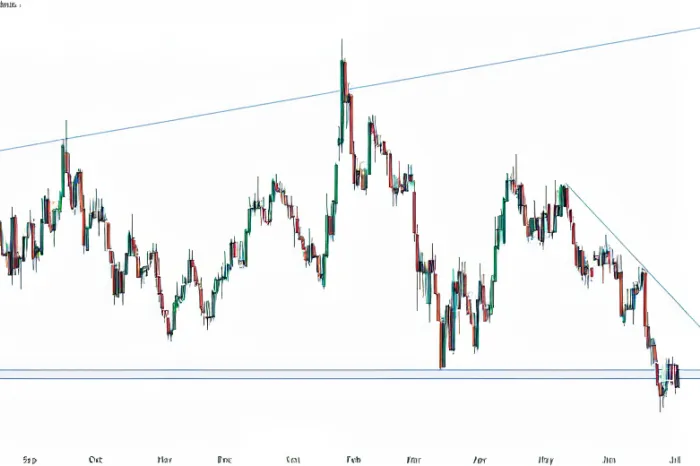
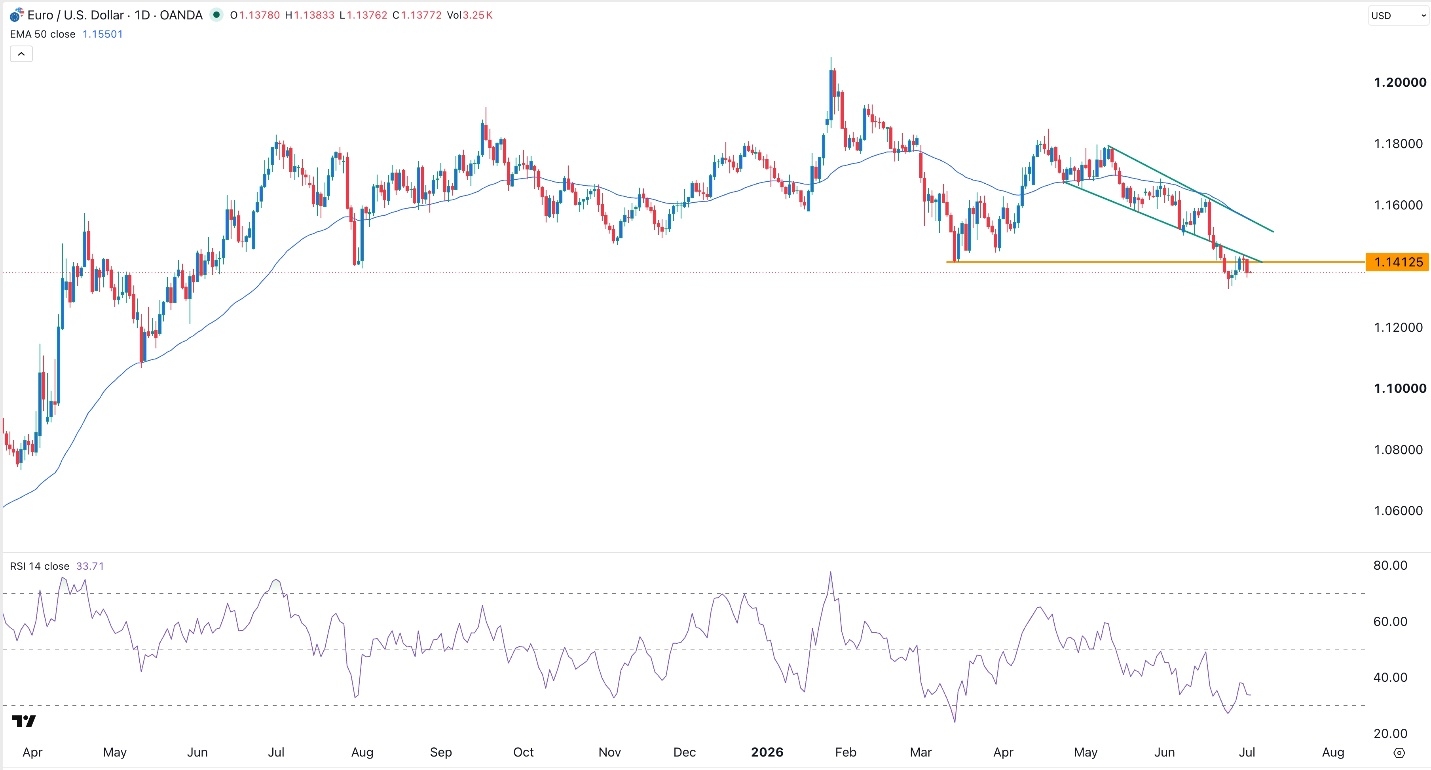
On the technical front, EUR/USD is consolidating near the 1.14 level after retreating into a previously broken support zone. The daily chart reveals a bearish flag pattern, with price action capped below the 200-period Exponential Moving Average (EMA) on the four-hour timeframe. Momentum indicators such as the Relative Strength Index (RSI) and Moving Average Convergence Divergence (MACD) also signal a bearish bias in the near term.
Traders are closely watching key US data releases, particularly the Nonfarm Payrolls (NFP) report and Consumer Price Index (CPI), which are expected to influence Federal Reserve policy decisions and market sentiment toward the US dollar. Current market pricing shows only a 29% chance of a rate hike in July, rising to 65% in September, suggesting that significant upside surprises in economic data would be required to prompt earlier tightening.
Recent European inflation figures indicate easing pressures, with headline Consumer Price Index dropping slightly and core inflation also declining. This trend reduces urgency for further ECB rate hikes this year, aligning with policymakers’ recent communications signaling a likely pause in monetary tightening unless geopolitical risks escalate.
The EUR/USD pair faces key technical support around 1.1366 and resistance near 1.1451 and 1.1522. A decisive move below support could open the path toward lower levels near 1.1200, while breaking above resistance zones may pave the way for higher targets around 1.18.
Market focus remains on upcoming US economic data releases, which will likely determine whether the dollar continues its strength or faces pressure from dovish repricing. Meanwhile, ongoing geopolitical developments and commodity price trends will influence ECB policy direction and broader market dynamics affecting EUR/USD.
Overall, while short-term risks appear tilted toward downside for EUR/USD amid persistent US inflation concerns and technical bearish signals, moderate Dollar strength easing combined with stable European growth prospects could allow for gradual stabilization around current levels over the medium term.