The GBP/USD currency pair is currently trading around the 1.3360 level, reflecting a cautious but positive sentiment among traders as it navigates a critical resistance near the 100-day simple moving average at approximately 1.3410. This movement follows the release of weaker-than-expected US Nonfarm Payrolls data, which has softened expectations for an imminent interest rate hike by the US Federal Reserve. The probability of a Fed rate increase by September has dropped to around 52% from 66% before the data release, easing pressure on the US Dollar and providing some support to the British Pound.
In early European trading, the Pound has strengthened modestly against the Dollar, buoyed by signs of a slowing US labor market. Despite this improvement, GBP/USD remains capped just below the 100-day moving average, signaling that bulls have yet to secure a decisive breakthrough. Technical indicators show the Relative Strength Index hovering near 54, suggesting moderate positive momentum without being overbought. The pair holds firm above immediate support at 1.3300 but faces resistance at both the 100-day SMA and upper Bollinger Band near 1.3468.
Political factors in the UK also play a significant role in shaping market expectations. Investors are closely watching developments following recent political changes, including Keir Starmer’s resignation and Andy Burnham’s focus on fiscal discipline. Analysts from Natixis note that while there is some short-term reassurance from Burnham’s approach, market participants remain alert to upcoming budget announcements that could alter fiscal policy and impact Sterling’s strength.
From a technical analysis perspective, Elliott Wave forecasts suggest two possible scenarios for GBP/USD in the near term. The primary outlook anticipates a corrective phase completion followed by a decline below 1.3467, targeting levels between 1.3050 and 1.2936. This bearish outlook hinges on failure to break above the key resistance level. Conversely, an alternative scenario proposes that a breakout and consolidation above 1.3467 could propel the pair higher toward targets in the range of 1.3660 to 1.3870, signaling renewed bullish momentum.
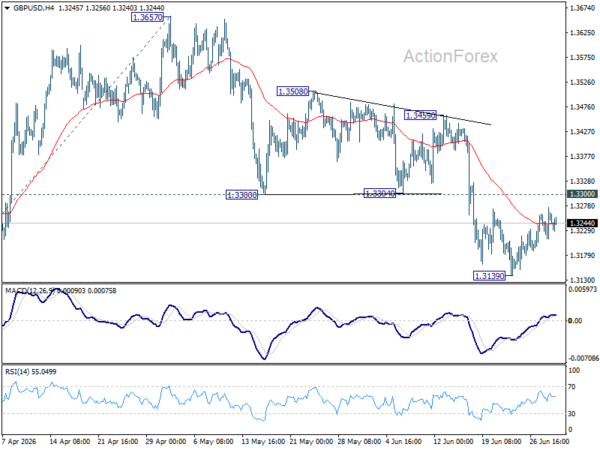
Meanwhile, broader intraday technical analysis highlights a neutral bias as GBP/USD consolidates above support at 1.3139. Resistance at around 1.3300 remains firm, limiting upside potential in the short term. Should the pair fall below 1.3139, it may resume its decline from earlier highs near 1.3657 with downside targets approaching 1.2948 based on projection levels.
In the bigger picture, price action since early 2022 suggests that despite recent corrections, medium-term bullish trends remain intact so long as support around 1.3008 holds firm. A sustained break above previous highs near 1.3867 would favor further gains toward longer-term resistance levels close to 1.4248, while a breach below key support could increase risks of deeper declines.
Overall, GBP/USD is navigating a delicate balance between supportive factors stemming from softer US data and caution induced by technical resistance and political uncertainties in the UK. Traders should monitor key levels closely—particularly around the 100-day moving average and psychological price points—as these will likely dictate whether Sterling’s rally can extend or if retracements will dominate in coming sessions.