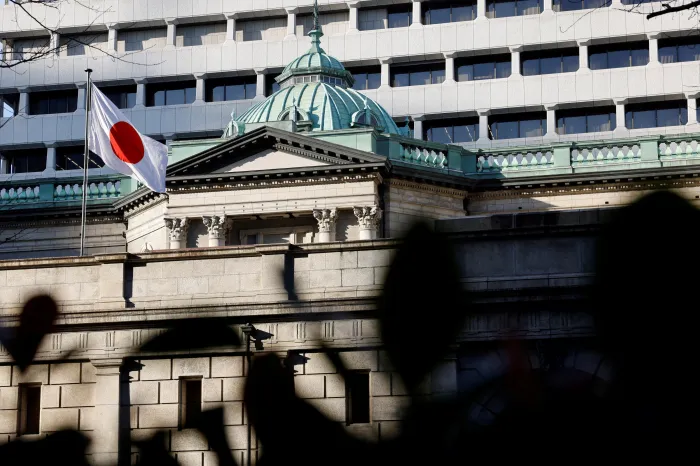
The Bank of Japan (BOJ) continues to face challenges as the yen remains weak against the US dollar, despite recent government warnings and interventions. Finance Minister Satsuki Katayama reaffirmed that Japan is in close communication with US officials regarding foreign exchange issues and is prepared to support the yen if necessary. This statement came after the yen briefly recovered from a 40-year low following a weaker-than-expected US jobs report, which softened expectations for imminent Federal Reserve interest rate hikes.
The yen traded at around 161.2 per dollar after hitting a historic low of 162.84 earlier in the week. The currency’s prolonged decline has intensified pressures on Japan’s economy, increasing import costs for raw materials and straining households and businesses already dealing with elevated energy prices linked to geopolitical tensions in the Middle East. The impact of the weak yen on the corporate sector was highlighted by a Tokyo Shoko Research report, which showed a 32% rise in bankruptcies related to currency depreciation during the first half of 2026.
Despite these economic strains, the government insists on maintaining its current monetary stance. Katayama emphasized that Tokyo’s position remains unchanged and that intervention will be considered whenever necessary to stabilize the currency. Moreover, Japanese and American authorities are reported to maintain regular contact on foreign exchange matters, even during US holidays, signaling ongoing cooperation between the two countries.
Market reactions have been mixed, however. While some traders speculated about potential official currency-buying interventions, actual moves have been limited. Meanwhile, Japan’s benchmark 10-year government bond yields surged to a 30-year high amid investor concerns over Prime Minister Sanae Takaichi’s ambitious fiscal spending plans. The government’s economic blueprint stresses close coordination with the BOJ but also signals resistance to further interest rate hikes, creating tension between fiscal policy and monetary tightening.
This tension is reflected within government circles as well, with some economic advisers advocating for moderate BOJ rate increases to curb excessive yen weakness and prevent sharp rises in bond yields. Economist Toshihiro Nagahama, known for his previous support of loose fiscal and monetary policies, recently called for cautious BOJ tightening measures to stabilize financial markets.
Overall, the yen’s persistent weakness underscores structural challenges facing Japan’s economy. Despite recent rate hikes and government efforts, market expectations suggest that the BOJ will continue to move cautiously with monetary tightening. The situation highlights a delicate balance between supporting economic growth, controlling inflation, and maintaining currency stability amid global uncertainties.
As Japan navigates these complex dynamics, close coordination between fiscal authorities and the central bank remains crucial. The government has pledged to implement measures aimed at revitalizing private-sector activity while maintaining market confidence in Japan’s fiscal health. However, the path forward will require careful management to address both domestic economic pressures and international market reactions.