
The Bank of Japan (BOJ) is navigating a challenging economic landscape as it balances efforts to curb inflation with the ongoing weakness of the Japanese yen. Recent data and expert commentary highlight a complex situation where moderate economic recovery coexists with significant risks related to rising prices and currency depreciation.
According to the BOJ’s June Tankan survey, business confidence among major manufacturers improved for the fifth consecutive quarter, driven in part by a surge in artificial intelligence-related industries. Sectors such as nonferrous metals and production machinery saw notable gains, reflecting optimism fueled by technological advancements. Despite this positive trend, uncertainty remains high due to global geopolitical tensions and supply chain disruptions.
Inflationary pressures are a central concern for policymakers. The Tankan report indicates that companies expect selling prices to increase by 3.7% over the next year, while consumer prices are projected to rise by 2.7%, exceeding the BOJ’s inflation target. Businesses are increasingly passing higher costs onto consumers, a shift from previous reluctance rooted in fears of losing sales during deflationary periods. This dynamic is particularly challenging for small and medium-sized enterprises, which face difficulties negotiating price adjustments.
The yen’s decline has added complexity to the BOJ’s policy decisions. The currency recently fell to about 162 yen per U.S. dollar, its weakest level in nearly four decades, while long-term interest rates climbed to their highest point in around 30 years. This depreciation reflects deeper structural changes in Japan’s economy, including shifts in trade patterns, energy import dependence, demographic challenges, and evolving investor behavior. Unlike past eras when the yen was seen as a safe haven, its role is now questioned amid these transformations.
Experts within Japan’s government advocate for cautious but steady interest rate increases to address excessive yen weakness and inflation risks. Toshihiro Nagahama, an economic advisor aligned with Prime Minister Sanae Takaichi’s administration, supports moderate hikes from the current 1% policy rate toward a neutral rate estimated at 1.5%. Such measures aim to restore currency stability without stifling economic growth.
Market reactions to recent BOJ decisions have been muted. The central bank raised rates by 0.25% in June but offered no clear path for future hikes, leading to uncertainty among investors. Meanwhile, geopolitical developments in the Middle East have contributed to demand for safe-haven assets like the U.S. dollar, limiting yen gains despite tentative agreements to ease regional tensions.
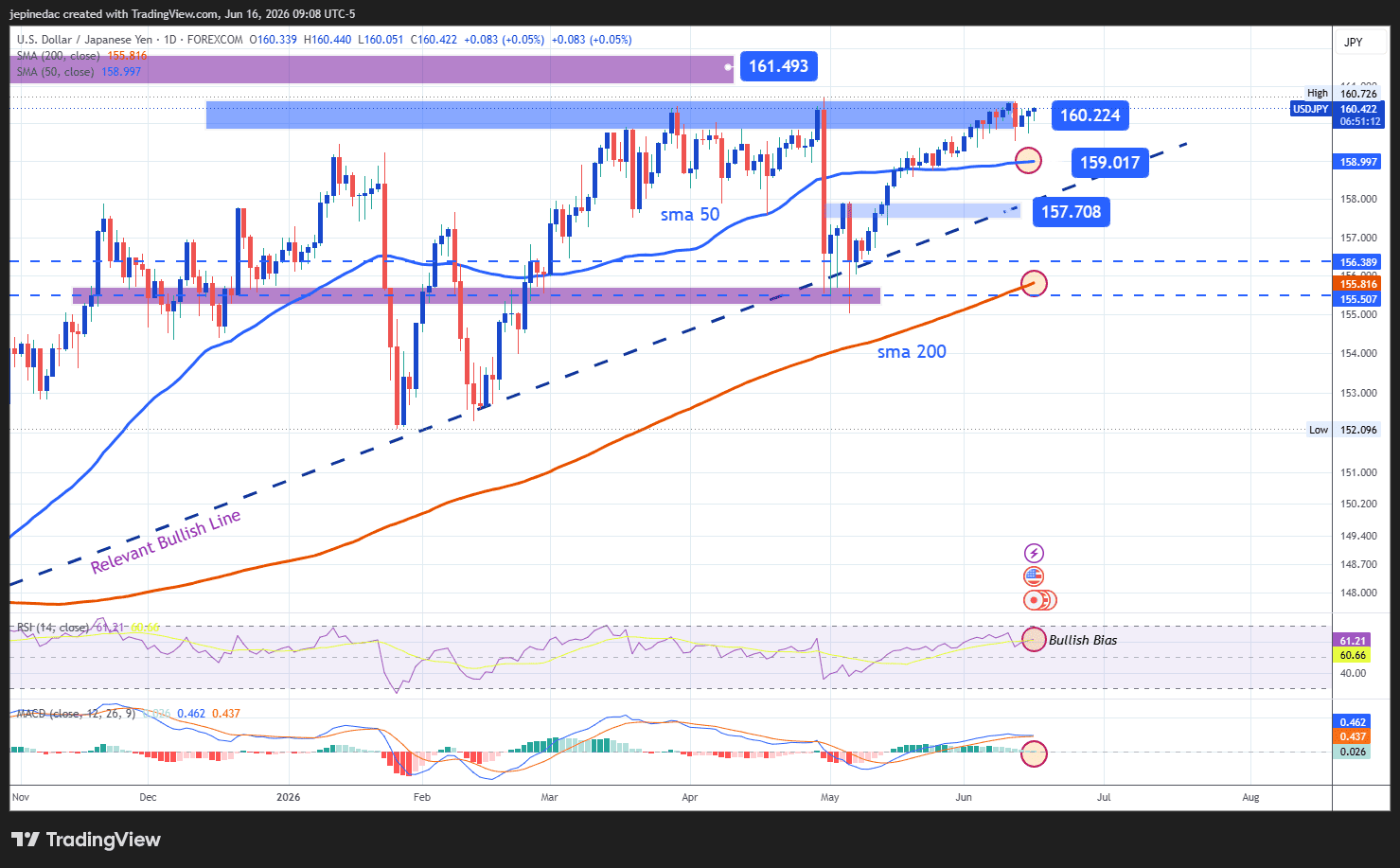
Technical analysis of USD/JPY suggests that the yen remains under pressure with no strong signs of recovery yet. The currency pair continues within a long-term upward trendline favoring the dollar, with key resistance and support levels indicating potential sideways movement unless significant policy changes or geopolitical shifts occur.
Overall, the Bank of Japan faces a delicate task: tightening monetary policy enough to contain inflation and stabilize the yen while avoiding harm to economic growth amid persistent uncertainties. How the central bank manages this balance will be critical for Japan’s financial markets and broader economic health in the months ahead.