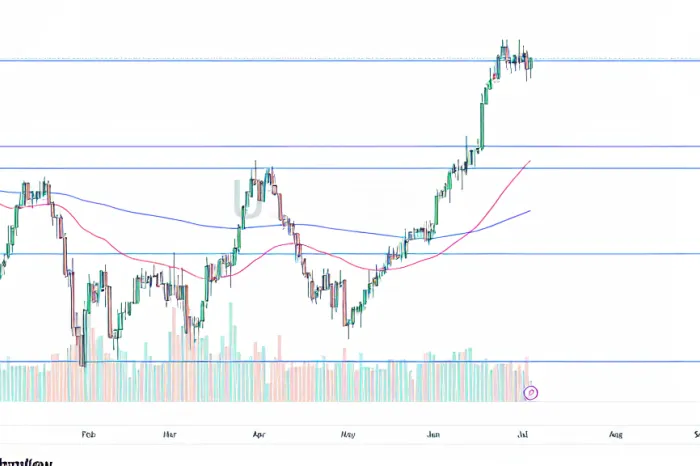
The USD/CAD currency pair is currently trading near the 1.4215 level, showing signs of consolidation after a period of volatility. The Canadian Dollar (CAD) remains under pressure as ongoing trade uncertainties and economic factors weigh on its performance against the US Dollar (USD). Market analysts highlight that despite some narrowing in interest rate spreads between the US and Canada, the CAD has not seen significant appreciation.
One of the major headwinds for the Canadian Dollar is the recent confirmation that the United States will not renew the United States-Mexico-Canada Agreement (USMCA). This decision has prolonged uncertainty for exporters in both Canada and Mexico, affecting business sentiment and investment plans. The Bank of Canada’s Q2 Business Outlook Survey is expected to reflect these concerns, potentially limiting confidence in the Canadian economy.
From a valuation perspective, experts consider the Canadian Dollar to be fundamentally undervalued. However, the gap between its current exchange rate and equilibrium levels has narrowed in recent weeks. This suggests that while the CAD remains cheap on paper, there is limited upside potential against the USD in the near term. Resistance for USD/CAD is seen around the 1.4250 level, with support identified near 1.4150 and further down at 1.4075/80.
Technical indicators reveal that the US Dollar remains overbought, which may imply that the current consolidation phase could be a temporary pause before further gains in USD/CAD. Traders are watching closely for a breakout from this range, which could signal more decisive moves in either direction. Meanwhile, factors such as oil prices, inflation data, and economic reports continue to influence market sentiment toward both currencies.
The Bank of Canada’s interest rate decisions play a critical role in shaping CAD performance. Higher interest rates generally support a stronger Canadian Dollar by attracting foreign capital inflows. Additionally, oil prices significantly impact the currency given Canada’s status as a major oil exporter; rising oil prices typically bolster the CAD, while declines exert downward pressure.
Economic data from both Canada and the United States also affect exchange rate movements. Strong economic indicators tend to strengthen respective currencies by encouraging investment and influencing central bank policies. However, with ongoing trade tensions and mixed economic signals, USD/CAD traders are advised to remain cautious amid a potentially volatile environment.
Looking ahead, market participants anticipate that USD/CAD may continue to trade within its current range before any clear directional breakout occurs. While some analysts foresee possible upward moves toward levels like 1.45 over time, short-term price action suggests sideways trading dominated by uncertainty around trade agreements and economic outlooks.