
The EUR/USD currency pair is currently trading near 1.144, reflecting ongoing uncertainty in the foreign exchange market as investors weigh economic data from both the United States and the Eurozone. Recent forecasts for 2026 and beyond reveal a complex picture, influenced heavily by central bank policies, inflation rates, and geopolitical developments.
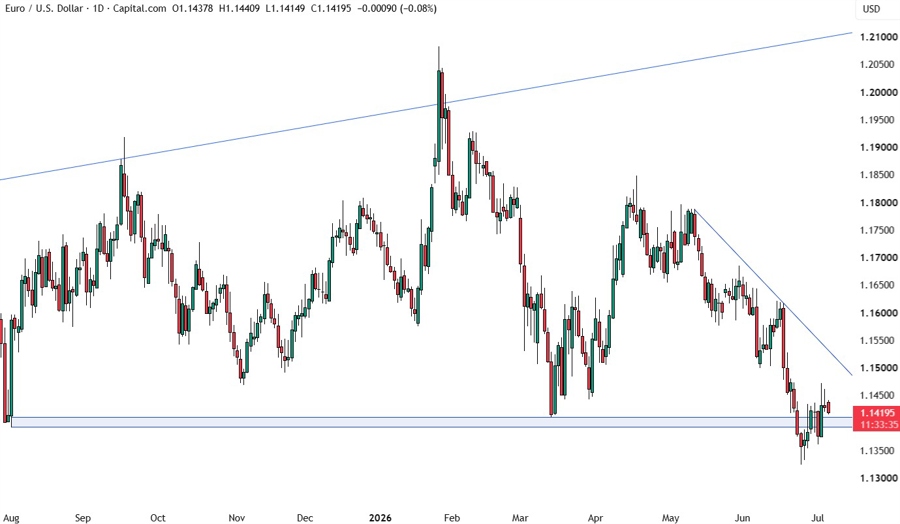
In early July 2026, the EUR/USD pair held steady at around 1.14412. Analysts note that this rate is sensitive to interest rate decisions by the Federal Reserve (Fed) and the European Central Bank (ECB), as well as inflation trends and economic growth indicators in both regions. Technical analysis suggests that the euro has begun a short-term bullish correction, but resistance levels near 1.146 to 1.153 remain significant hurdles.
Market sentiment remains cautious amid mixed signals. The US dollar has recently gained strength after a subdued Nonfarm Payrolls (NFP) report softened expectations for imminent Fed rate hikes. However, Federal Reserve officials continue to emphasize their commitment to controlling inflation, keeping the dollar supported. Investors are awaiting the release of the FOMC meeting minutes for further guidance on future monetary policy.
On the European side, core inflation data showed an easing trend with Eurozone core HICP falling to 2.4% in June, below expectations. This reduction in inflation pressure has led to diminished expectations for further ECB rate hikes this year, contributing to a softer euro against the dollar despite its relative strength against other major currencies.
Looking ahead, analysts’ forecasts for the EUR/USD pair vary widely. Some expect the pair to fluctuate between 1.11 and 1.24 in 2026, with December potentially seeing higher levels near 1.20 or above. For 2027, projections range from a low near 1.03 up to highs around 1.33, reflecting uncertainty about economic conditions and central bank policies in both regions.
Technical indicators across different timeframes suggest continued consolidation near key support at 1.14, with potential for either further downside toward 1.10 or a rally back toward resistance levels around 1.18 if buyers regain momentum. Traders are advised to monitor key economic releases such as US CPI data, ISM manufacturing surveys, and upcoming Fed communications which could trigger significant moves.
Longer-term outlooks up to 2030 present even greater divergence among experts, with some forecasting a strengthening euro reaching levels above 1.40, while others anticipate declines toward or below parity depending on global economic shifts and monetary policy changes.
Overall, while the EUR/USD pair remains one of the most actively traded currency pairs globally due to its liquidity and responsiveness to macroeconomic factors, current market conditions favor active trading rather than long-term holding strategies. Investors should remain vigilant of geopolitical risks, inflation trends, and central bank signals that will continue to shape this currency pair’s trajectory.