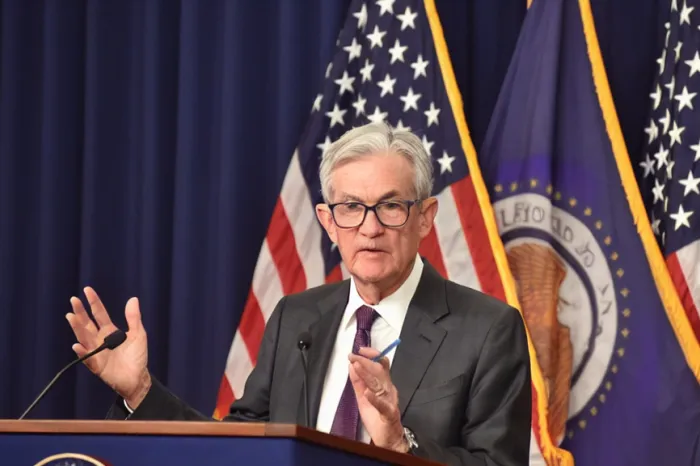
Jerome Powell, the current chairman of the Federal Reserve, has confirmed that he will remain a member of the Federal Reserve Board until 2028, despite stepping down from his position as chair. This decision is unusual, as former Fed chairs rarely stay on the board after relinquishing their leadership roles. Powell’s announcement comes in the wake of a lawsuit withdrawal by former President Donald Trump, which had contested Powell’s involvement in funding a $2 billion Taj Mahal project near the White House.
Powell’s time as Fed chair has drawn mixed reactions. Inflation under his leadership mostly stayed above the Federal Reserve’s target range, except for a brief period in early 2021 when it fell between 1.8% and 2.2%. Critics argue that some of his policies contributed to economic instability, including near-recession conditions in 2018 triggered by high interest rates. Later, during the COVID-19 pandemic recovery, the Fed’s injection of cheap money led to inflation levels not seen since the late 1970s.
Initially, the Federal Reserve described the inflation spike as “transitory,” but elevated prices persisted for two years, impacting everyday expenses such as groceries and fuel. Some analysts have suggested that Powell’s monetary policies were influenced by political considerations, especially in relation to former President Trump. While Powell publicly criticized Trump’s tariffs, he did not highlight certain economic gains from Trump-era tax cuts and deregulation. Additionally, he did not openly challenge the large government spending enacted under President Biden following the pandemic.
Powell’s choice to stay on the Federal Reserve Board has sparked debate about its implications for future policy direction. It presents challenges for incoming Fed chair Kevin Warsh, who was nominated by Trump and is expected to focus on stabilizing monetary policy. Warsh faces the task of addressing issues inherited from Powell’s tenure while navigating this rare situation of overlapping board membership. Observers suggest Warsh might push for greater fiscal discipline, including urging Congress to control spending and advocating for internal reforms within the Fed.
As Powell prepares to step down as chair but continue influencing Federal Reserve decisions as a board member, questions remain about his lasting impact on U.S. monetary policy. Some critics view his extended role as politically motivated rather than customary practice. Conversely, supporters see it as a way to maintain continuity amid economic uncertainty. Regardless of perspective, Powell’s ongoing presence ensures he will remain a significant figure in shaping Federal Reserve policies well into the next several years.