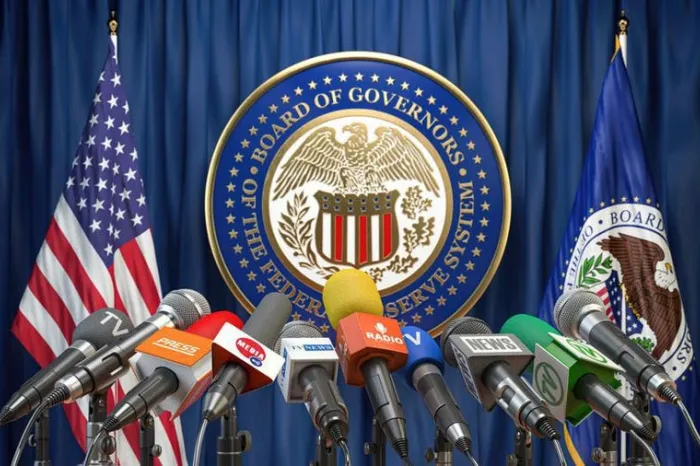
The Federal Reserve has released its annual stress test results, demonstrating that the largest U.S. banks are well-prepared to withstand a severe economic recession. The examination covered 32 banks with assets exceeding $100 billion, including major institutions such as JPMorgan Chase, Bank of America, Citigroup, Wells Fargo, Goldman Sachs, and Morgan Stanley. These banks showed they have enough capital to absorb significant losses even in a harsh economic scenario.
In the Fed’s hypothetical recession model, the economy would shrink by 4.6%, unemployment would reach 10%, home prices would fall by 30%, commercial real estate values would drop by 39%, and the stock market would decline nearly 58%. Despite these severe conditions, all tested banks maintained their capital levels above the required minimum threshold. The common equity tier 1 capital ratio—a key measure of high-quality capital—fell from 12.8% to a low of 11.2% but then rebounded to 12.7%. This is well above the regulatory minimum of 4.5%, indicating strong resilience.
Collectively, the banks faced simulated losses exceeding $708 billion in this stress test. These losses included $203 billion from credit card defaults, $158 billion from business loan losses, and $77 billion from commercial real estate declines. Although interest rates declined less sharply than in previous tests, net interest income helped offset some losses in commercial real estate. Conversely, a steeper drop in equity prices led to higher loan losses in business sectors.
Federal Reserve Vice Chair for Supervision Michelle Bowman highlighted the robustness of the banking system amid these results. She emphasized ongoing efforts to increase transparency and accountability in the stress testing process, welcoming public feedback to improve confidence in future assessments.
The Fed has conducted these stress tests annually since the 2008 financial crisis for banks with more than $100 billion in assets. The tests are designed to ensure banks have sufficient capital buffers to continue lending through economic downturns and avoid failures that could threaten financial stability.
This year’s results were anticipated with less drama than previous years because the Fed announced it would not adjust banks’ stress capital buffers based on these findings. This means banks’ additional capital requirements will remain steady for now. Analysts expect many banks to maintain moderate dividend payouts and stock buybacks given broader economic uncertainties such as geopolitical risks and inflation pressures.
Industry experts also note that banks are awaiting final regulatory decisions on new capital rules, including changes proposed under Basel standards, which could free up billions of dollars for banks to return to investors or reinvest in their operations. The Federal Reserve is also working on reforms to make stress tests more transparent and easier for the public and industry participants to understand.
Overall, the Fed’s latest stress tests affirm that major U.S. banks hold strong capital positions capable of supporting the economy during a severe recession scenario while continuing to serve households and businesses effectively.