
 Anna
Anna 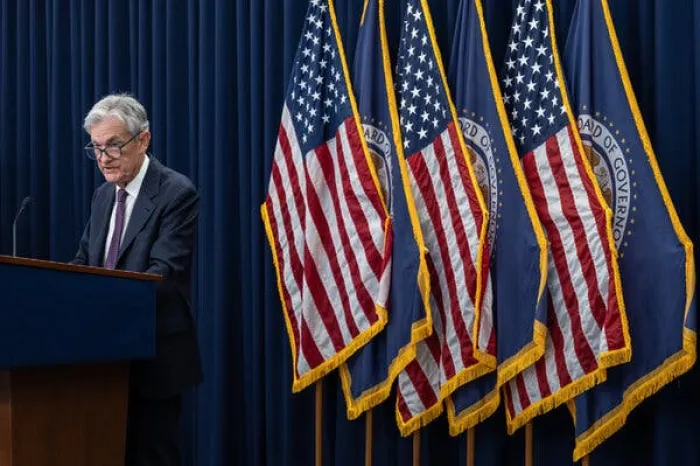
The Federal Reserve, often simply called the Fed, plays a vital role in maintaining economic stability in the United States, especially during times of crisis. As the nation faces ongoing inflation concerns, geopolitical tensions, and recent banking sector shocks, the Fed’s decisions and future leadership have become central topics of discussion.
Established in the early 20th century, the Fed was designed to provide an elastic currency, supervise banks, and act as a lender of last resort when banks face sudden withdrawals. Unlike Congress, which can take considerable time to pass financial legislation, the Fed can respond instantly to economic emergencies. This rapid response capability was evident during the 2008 financial crisis and more recently in 2022 with the collapse of Silicon Valley Bank (SVB).
Nobel laureate Douglas Diamond, a professor at the University of Chicago Booth School of Business, has extensively studied financial crises. He highlights that while commercial banks currently hold strong capital positions due to strict regulations post-2008, many risky activities have shifted to less regulated sectors known as shadow banking. This shift creates new vulnerabilities outside traditional banking oversight.
Diamond warns that recent moves to roll back capital requirements and reduce stress tests—tools used to evaluate how banks would handle severe economic shocks—could weaken financial stability. Stress tests have been crucial in ensuring banks maintain enough capital to withstand crises. Without them, banks might operate with lower safety margins, increasing the risk of insolvency and potential runs by depositors.
The 2022 collapse of Silicon Valley Bank serves as a case study. SVB held a large portion of its assets in medium-term government securities that lost value as interest rates rose rapidly. With most of its deposits uninsured and concentrated among venture capital-backed firms, a swift withdrawal of funds triggered a bank run. Diamond notes this event was unexpected but underscores the importance of considering interest rate risks in supervision policies.
The Fed’s independence remains a cornerstone for maintaining credibility, particularly in controlling inflation. If political pressures force the Fed to adopt short-term solutions that compromise long-term goals, it risks losing public trust and allowing inflation expectations to spiral upward. The Fed must balance its role as a regulator with its monetary policy responsibilities while navigating calls for deregulation and shifts in leadership.
Looking ahead, Diamond emphasizes that financial crises cannot be entirely eliminated but their severity can be limited through careful regulation and supervision. The financial system’s ability to create liquidity through short-term debt backed by long-term assets is beneficial but also vulnerable to runs if confidence falters. Regulators must ensure banks are sufficiently capitalized to avoid systemic failures.
For everyday investors and families concerned about economic uncertainties, Diamond advises maintaining a long-term investment strategy aligned with personal risk tolerance rather than reacting impulsively to market fluctuations or political developments.
As the Fed prepares for new leadership and faces complex economic challenges, its actions will be critical in shaping the stability and growth prospects of the U.S. economy.
