The British pound has gained ground against the US dollar, climbing toward the 1.35 level, its highest since early April. This movement comes ahead of the Bank of England’s (BoE) interest rate decision, where policymakers are widely expected to keep rates steady at 3.75%. The BoE’s cautious approach reflects ongoing uncertainty surrounding inflation risks driven by recent energy price shocks.
Following a hawkish stance from the Federal Reserve earlier this week, which saw some dissent among policymakers, market participants are closely watching the BoE for signals on future monetary policy. Governor Andrew Bailey and the Monetary Policy Committee have recently tempered expectations for immediate rate hikes, instead favoring a wait-and-see position to better understand how rising oil prices might affect inflation and economic growth.
Inflation in the UK remains elevated, with headline inflation at 3.3% and core inflation slightly softer at 3.1% as of March. While these figures highlight ongoing inflationary pressures, concerns about a weakening labor market provide a counterbalance to tightening monetary policy. Analysts note that any decision to hold rates will give the BoE time to assess potential second-round effects on wages and broader price levels.
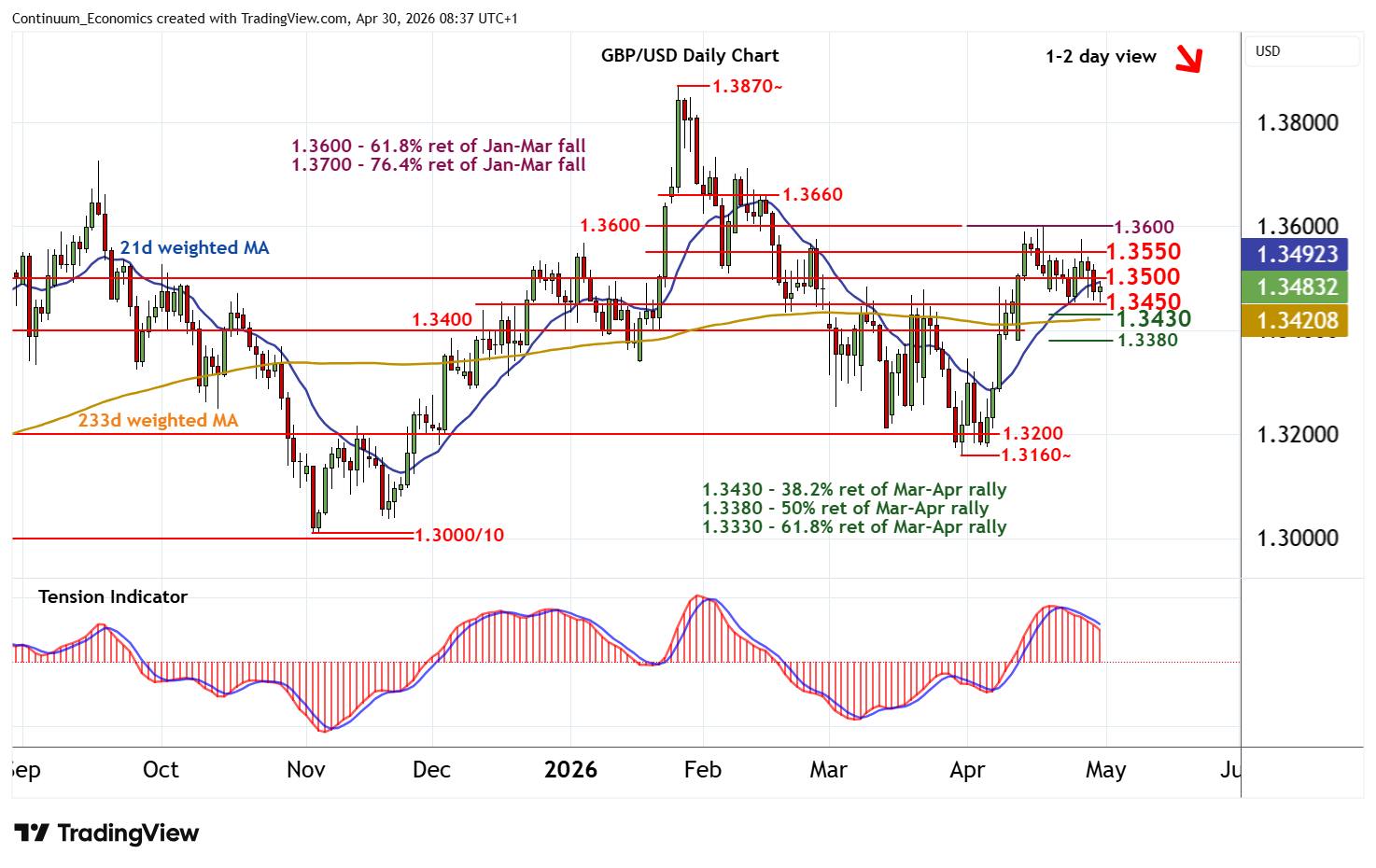
Technical analysis of GBP/USD shows the pair recovering from lows around 1.3150 earlier this year, breaking above key moving averages before pulling back slightly to test support near 1.3450. Should this support hold, traders may look for a retest of recent highs near 1.36 and possibly higher toward 1.37. Conversely, a break below this level could expose further downside risks toward 1.34 and beyond.
Meanwhile, European markets are under pressure as the DAX index falls for a ninth consecutive day amid rising oil prices and geopolitical tensions linked to possible US military action in Iran. Oil prices surged nearly 7% to $115 per barrel, stoking fears of prolonged supply disruptions and inflationary pressures across Europe. The European Central Bank (ECB) is also set to announce its interest rate decision shortly, with expectations for a hold at 2%, though hawkish signals from ECB President Christine Lagarde could weigh on markets further.
Investor sentiment remains cautious as earnings reports from major companies like Volkswagen and Porsche reveal mixed results, adding to uncertainty in financial sectors sensitive to economic shifts. In the US, strong earnings from tech giants Amazon and Alphabet have supported risk assets, but increased spending plans from Meta Platforms have unsettled investors.
Overall, the GBP/USD pair reflects a complex interplay between central bank policies, inflation dynamics, and geopolitical risks. With US dollar weakness emerging amid declining US interest rates and intervention in currency markets such as Japan’s support for the yen, traders are positioned for potentially volatile movements in major currency pairs in the near term.