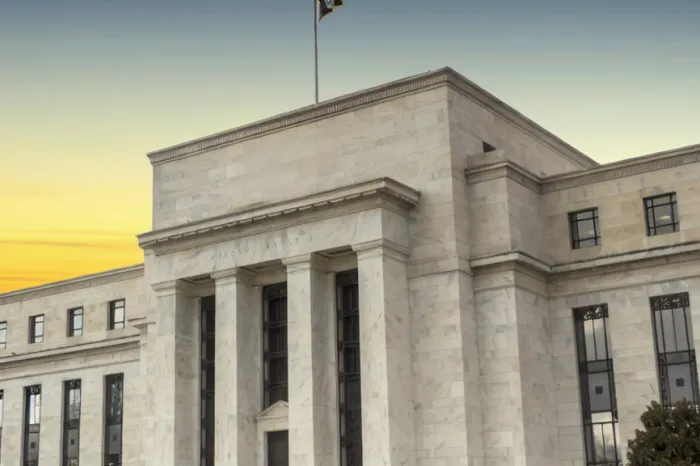
Kevin Warsh, the newly appointed Chair of the Federal Reserve, is advocating for substantial reforms aimed at refining the central bank’s operations. His agenda centers on enhancing decision-making transparency, scaling back the Fed’s extensive market involvement, and tightening its institutional scope to reinforce discipline and clarity in policy execution.
Warsh expresses concern over the broad discretion the Fed currently wields, especially evident in its use of forward guidance following the financial crisis. This strategy, which involves signaling future policy intentions to influence markets, has introduced uncertainty and weakened credibility since policymakers can shift their stance as economic conditions change. He argues that forward guidance should be minimized during stable economic periods. Instead, Warsh supports adopting a more rules-based framework that ties policy decisions closely to measurable economic indicators. This approach aims to boost transparency and accountability without altering the Fed’s dual mandate of price stability and maximum employment.
Another critical focus for Warsh is the Federal Reserve’s expanded balance sheet. Prior to 2008, the Fed maintained a relatively modest asset portfolio focused on conventional monetary tools. The advent of Quantitative Easing (QE) led to significant growth in holdings of government bonds and mortgage-backed securities. While QE served as an emergency stimulus, Warsh warns that it has distorted financial markets and complicated efforts to normalize monetary policy. He endorses ongoing initiatives to shrink the balance sheet and cautions against treating large-scale asset purchases as a standard policy instrument.
Warsh also highlights concerns about the Fed’s gradual mission creep beyond traditional monetary policy. He critiques programs like QE for blurring monetary and fiscal boundaries, which risks diluting focus on price stability. Reflecting his preference for limiting the Fed’s role in retail financial services, Warsh opposes proposals for a central bank digital currency. Nonetheless, he advocates for closer collaboration with the Treasury Department, a stance that raises questions about preserving the Fed’s independence while aligning on broader fiscal matters. Additionally, through regulatory functions such as capital requirements and stress testing, the Fed influences credit markets well beyond its core monetary objectives.
In summary, Warsh envisions a Federal Reserve that is smaller in scope but stronger in accountability and effectiveness. By narrowing its institutional footprint and reaffirming price stability as its primary goal, he believes the Fed can restore market confidence and provide clearer policy guidance. His leadership signals a renewed commitment to disciplined governance and measured market intervention.
These reform proposals arrive amid intensifying global debates over central bank independence and policy efficacy. Warsh’s vision may significantly shape how the Federal Reserve balances flexibility with predictability in an increasingly complex economic landscape.