
The GBP/USD currency pair experienced a notable decline following the release of stronger-than-expected U.S. employment figures, highlighting the significant impact of American economic data on the British pound’s performance against the dollar. On June 5, 2026, U.S. non-farm payrolls surged by 172,000 in May, more than double market forecasts of around 85,000 jobs. This robust job growth, coupled with a steady unemployment rate of 4.3%, reinforced investor expectations that the Federal Reserve would maintain a hawkish monetary policy stance.
The stronger labor market data triggered a sharp rise in U.S. Treasury yields, particularly at the two-year maturity, which climbed to over 4.13%. This surge in yields reflected heightened market anticipation for potential interest rate hikes later in the year. Consequently, the U.S. dollar strengthened broadly against major currencies including the British pound and euro, putting downward pressure on GBP/USD exchange rates.
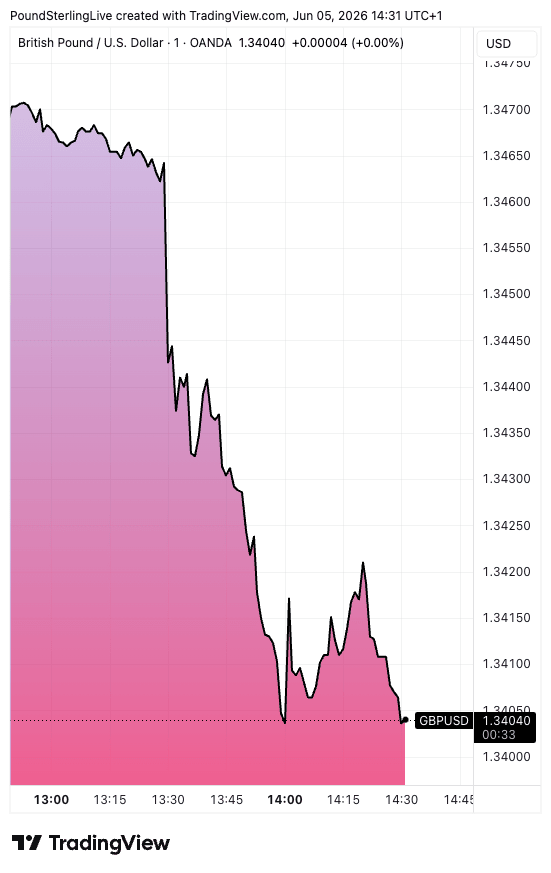
Earlier in the day, GBP/USD had hovered just above the 1.3400 level, supported by hopes of easing geopolitical tensions following talks of a possible U.S.-Iran deal and some relief in global bond markets. However, these positive sentiments were overshadowed by the strong employment report and persistent inflation concerns. The April Consumer Price Index (CPI) data showed inflation running at 3.8% year-over-year, with core inflation slightly higher at 4.1%, contributing to expectations that the Federal Reserve would remain cautious about reducing interest rates soon.
Market analysts noted that despite recent geopolitical developments such as a fragile ceasefire between the U.S. and Iran and some optimism regarding peace efforts, inflation remains a dominant factor influencing currency movements. The pound struggled to maintain gains as traders focused on the resilience of the U.S. economy and its implications for monetary policy.
Technical analysis indicated that GBP/USD found temporary support near 1.343 but faced strong resistance around 1.3470 to 1.3500 levels. Analysts from various financial institutions suggested that as long as GBP/USD remains below this resistance zone, risks persist for further downside movement towards levels near 1.3390 or lower.
Looking ahead, market participants are closely monitoring upcoming economic data releases and Federal Reserve communications for clues about future rate decisions under new Fed Chair Kevin Warsh. While the probability of an immediate rate hike remains below 40%, ongoing strong labor market reports and sticky inflation could prompt a shift away from the Fed’s easing bias at its next policy meeting.
In summary, recent U.S. economic data have reinforced the dollar’s strength against the British pound, with GBP/USD reacting sensitively to changes in employment figures and inflation trends. Geopolitical developments may influence short-term volatility but are unlikely to outweigh fundamental economic factors driving currency valuations in the near term.