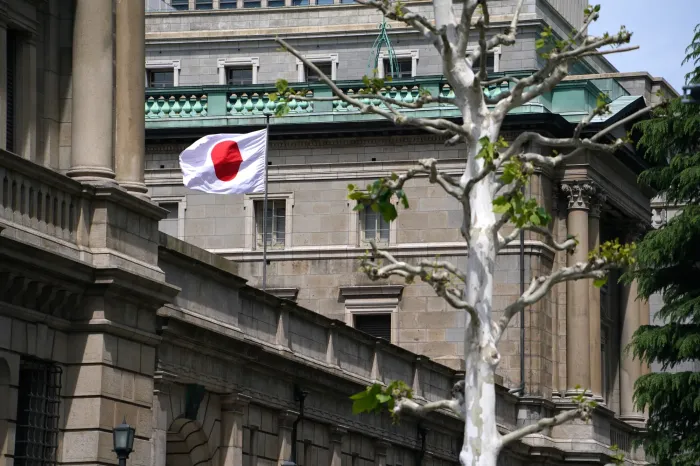
The Bank of Japan (BOJ) is widely expected to raise its short-term interest rate in June, marking a significant shift in its monetary policy after years of low rates. Sources close to the central bank have indicated that unless there is a major escalation in the Middle East conflict, the BOJ will likely increase its policy rate from 0.75% to 1.0% during the two-day meeting ending on June 16. This would be the highest rate level since 1995, reflecting the central bank’s growing focus on combating inflation.
The decision comes as Japan faces mounting price pressures fueled by rising energy costs linked to renewed hostilities in the Middle East. Wholesale prices in Japan rose by 4.9% year-on-year in April, their fastest pace in three years, driven largely by higher oil and chemical prices. Analysts expect this inflationary pressure to push core consumer inflation above the BOJ’s 2% target later this year, despite government subsidies that have temporarily dampened consumer price increases.
BOJ Governor Kazuo Ueda has signaled a clear change in approach with recent speeches emphasizing the need to tackle inflation more aggressively. His comments suggest the possibility of more frequent rate hikes ahead, a notable departure from the central bank’s historically cautious stance. Board members Kazuyuki Masu and Junko Koeda have also expressed concerns about rising prices, indicating internal support for tightening monetary policy.
However, the ongoing conflict in the Middle East remains a key factor in the BOJ’s deliberations. The central bank is closely monitoring developments and their potential economic impact up to the final moments before announcing any decision. The yen’s recent depreciation has further complicated matters by increasing import costs and adding to inflationary pressures.
Market participants are not only focused on interest rate changes but also on the BOJ’s bond purchase tapering strategy. While some progress has been made in reducing its massive balance sheet since 2024, sources suggest that the central bank may slow or pause tapering efforts in fiscal 2027 to avoid disrupting financial markets. Governor Ueda highlighted improvements in bond market functioning but stressed the importance of maintaining stability as investor demand adjusts.
Amid these shifts, Mitsubishi UFJ Asset Management’s executive chief fund manager Masayuki Koguchi warned that a standard 25 basis point hike might be insufficient to stabilize the yen and Japanese government bonds. He proposed that if inflation accelerates further, the BOJ could consider larger hikes of 50 or even 75 basis points in a single meeting. Such moves would mark a more aggressive monetary tightening phase and could significantly impact global markets, as seen during previous rate increases.
This evolving monetary policy landscape signals an end to nearly three decades of ultra-low interest rates aimed at stimulating Japan’s economy through wage growth and increased consumer spending. The next BOJ meeting carries heightened significance for investors and policymakers alike as they navigate inflation risks, currency volatility, and economic uncertainties both domestically and internationally.