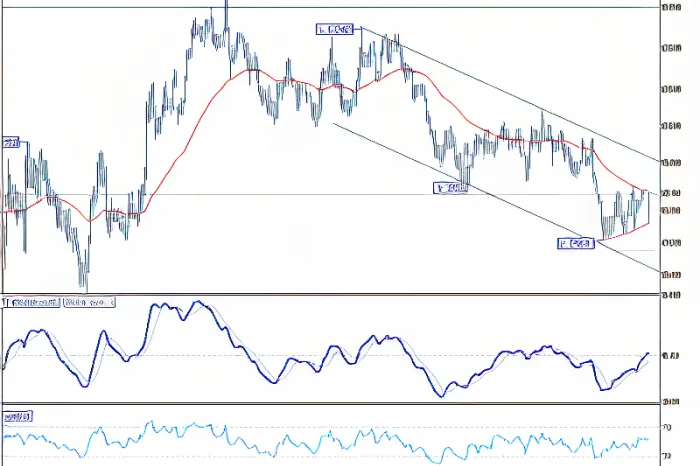
The forex market continues to captivate traders globally, driven by shifting economic conditions and central bank policies. This week’s focus remains on major currency pairs such as EUR/USD, EUR/AUD, and USD/JPY, where recent trends reflect evolving monetary strategies and economic data releases.
EUR/USD Maintains Focus Amid Economic Updates
The EUR/USD pair remains a cornerstone of forex trading due to its high liquidity and sensitivity to economic developments from both the Eurozone and the United States. Traders frequently employ technical indicators like pivot points, volatility indexes, and action bias analytics to identify crucial support and resistance levels. These tools enable market participants to make informed decisions on entry and exit points amid fluctuating price dynamics.
EUR/AUD Responds to Risk Appetite and Commodity Fluctuations
Attention has turned to the EUR/AUD pair as it reacts noticeably to changes in global risk sentiment and commodity price movements. Australia’s significant role as a major commodity exporter adds weight to this dynamic. Market analysts stress the importance of monitoring economic data from both regions alongside geopolitical events that could influence investor confidence. Instruments such as heat maps and top mover reports help traders assess relative currency strength, guiding strategic trading choices.
USD/JPY Experiences Volatility Linked to Central Bank Communications
The USD/JPY pair is under close watch as investors anticipate potential breakouts triggered by policy signals from the Federal Reserve and the Bank of Japan. The contrasting monetary approaches of these two institutions often result in increased volatility within this currency pair. While historical price data offers context, experts caution that past trends do not assure future outcomes, underscoring the need for prudent risk management when trading leveraged positions.
Risk control remains a critical consideration across all highlighted currency pairs. Financial professionals consistently advise traders that instruments such as futures, options, and CFDs carry significant risks that may not be suitable for every investor. It is essential for traders to carefully evaluate their financial goals, experience level, and risk tolerance before engaging in forex market activities.
Overall, this week’s outlook underscores the importance of combining technical analysis with an awareness of broader economic indicators and central bank policy decisions. Utilizing diverse analytical tools—including pivot meters, volatility charts, and heat maps—can help traders navigate the inherent uncertainties of the forex market while staying ready for moves influenced by key economic data and monetary policy announcements.