The USD/CAD currency pair is trading near its highest levels since April 2025, reflecting a complex mix of economic and geopolitical factors. On Tuesday, the pair hovered around 1.4165 to 1.4170, after a slight pullback from recent peaks driven by a stronger US dollar and weak crude oil prices. The Canadian dollar continues to face downward pressure largely due to falling oil prices and contrasting monetary policies between the United States and Canada.
Oil prices have been under sustained pressure following the US Treasury’s temporary easing of sanctions on Iranian crude exports. This development has kept West Texas Intermediate (WTI) crude near its lowest levels since March, undermining support for the Canadian dollar, which is closely tied to commodity prices due to Canada’s status as a major oil exporter. Despite a recent 3.2% rise in Canadian inflation for May—the highest in 29 months—the Bank of Canada (BoC) is expected to maintain a dovish stance, focusing on signs of slowing domestic growth rather than tightening monetary policy aggressively.
In contrast, the US Federal Reserve has signaled a more hawkish approach, with policy rates projected to reach 3.8% by year-end, including a likely 25 basis point hike in the coming months. This divergence in central bank policies has widened the interest rate gap between the US and Canada, making the US dollar more attractive to investors and pushing USD/CAD higher. Additionally, geopolitical tensions in the Middle East have bolstered risk aversion, increasing demand for the safe-haven US dollar.
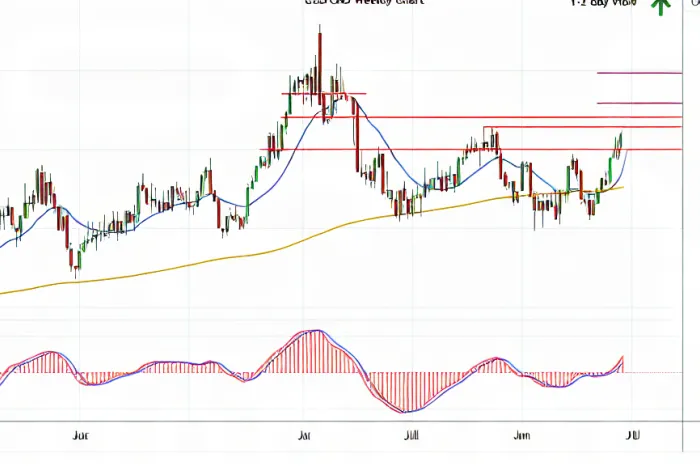
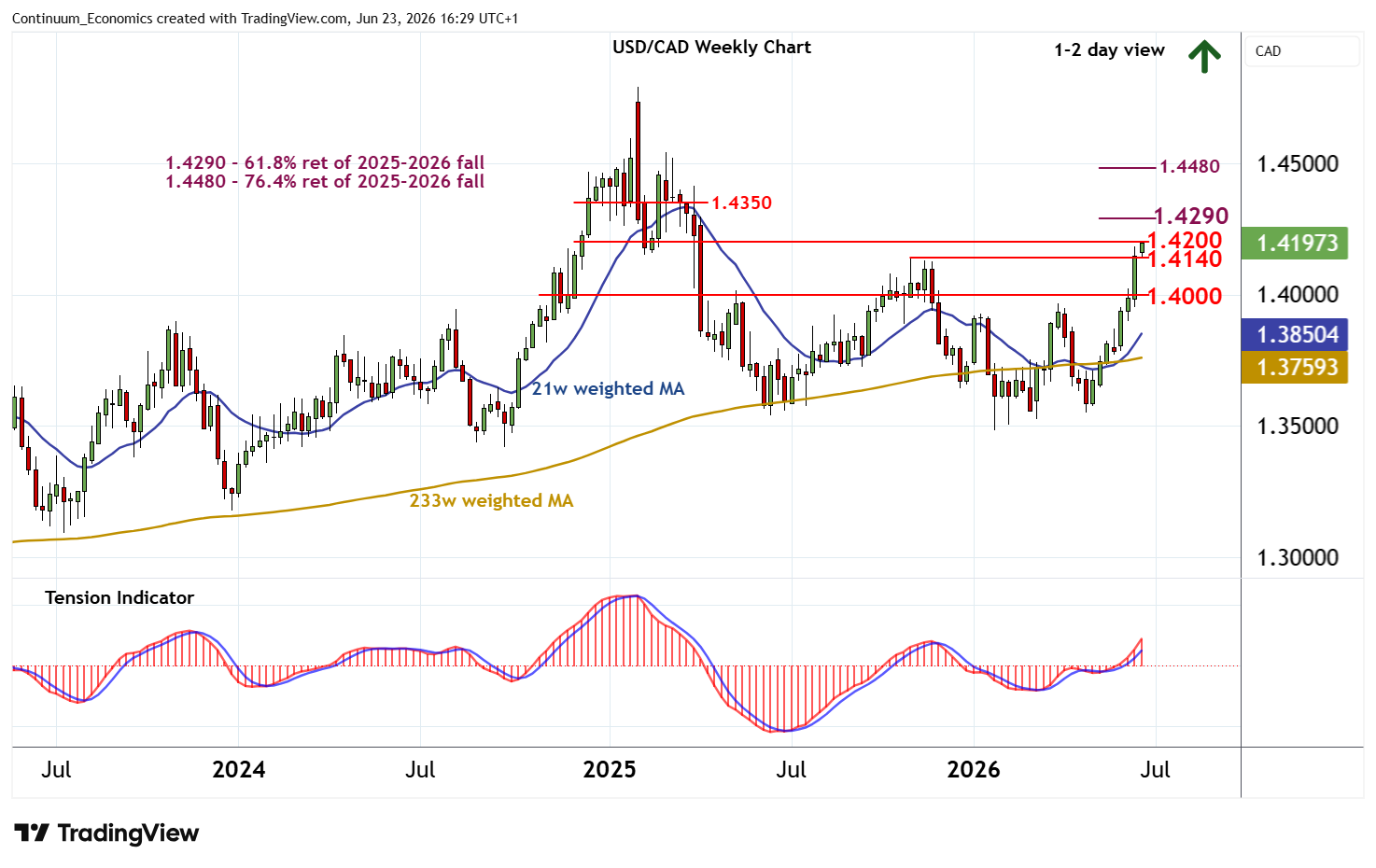
Technical analysis supports further strength in USD/CAD as the pair tests resistance levels around 1.4200, close to congestion zones from previous highs. Momentum indicators suggest some overbought conditions may lead to short-term consolidation or profit-taking before any further upward moves. Key support levels are seen near 1.4140 and 1.4000, with a break above current resistance potentially opening targets near 1.4290, corresponding to Fibonacci retracement levels from prior declines.
Market participants are closely watching upcoming events that could influence USD/CAD dynamics. Bank of Canada Governor Tiff Macklem’s scheduled speech and US flash Purchasing Managers’ Index (PMI) data releases may offer new insights into economic conditions and central bank policy directions. Meanwhile, developments related to US-Iran relations remain a significant source of volatility that could impact oil prices and currency markets.
The Canadian economy shows signs of weakness with recent data indicating a second consecutive monthly GDP contraction in April by 0.1%. This sluggish performance underpins expectations that the BoC will prioritize supporting growth over inflation control in its policy decisions for the remainder of 2026. While oil prices have rebounded modestly amid concerns about fragile peace talks between the US and Iran, their positive effect on the Canadian dollar is being overshadowed by broader market forces favoring the US dollar.
In summary, the USD/CAD exchange rate is influenced by multiple factors including diverging monetary policies, oil market developments, and geopolitical risks. The current environment favors continued strength in the US dollar against the Canadian dollar with technical charts pointing toward potential further gains in the near term.